
“The first vertical drama I watched was You Belong With Me on ReelShort, and to be fair, Eric Guilmette taking his shirt off (as the unexpectedly hot uncle of the rejected main guy) definitely caught my attention! But what really stood out was the soapy, high-stakes format. It had this fun, tongue-in-cheek quality while still delivering a genuinely emotional love story at its core. Emma Hular was fantastic in it, and it featured one of my favourite romance tropes: the big, dramatic gesture, the kind you see in films like Chasing Liberty. It was entertaining, fast-paced, and held my attention all the way through. I loved that it felt like a complete story, just in a shorter format. And honestly, it was refreshing to watch American actors for once, no need for subtitles, just easy escapism. The speed and intensity of it were exactly what I needed at the time.”, Jeen Cooper
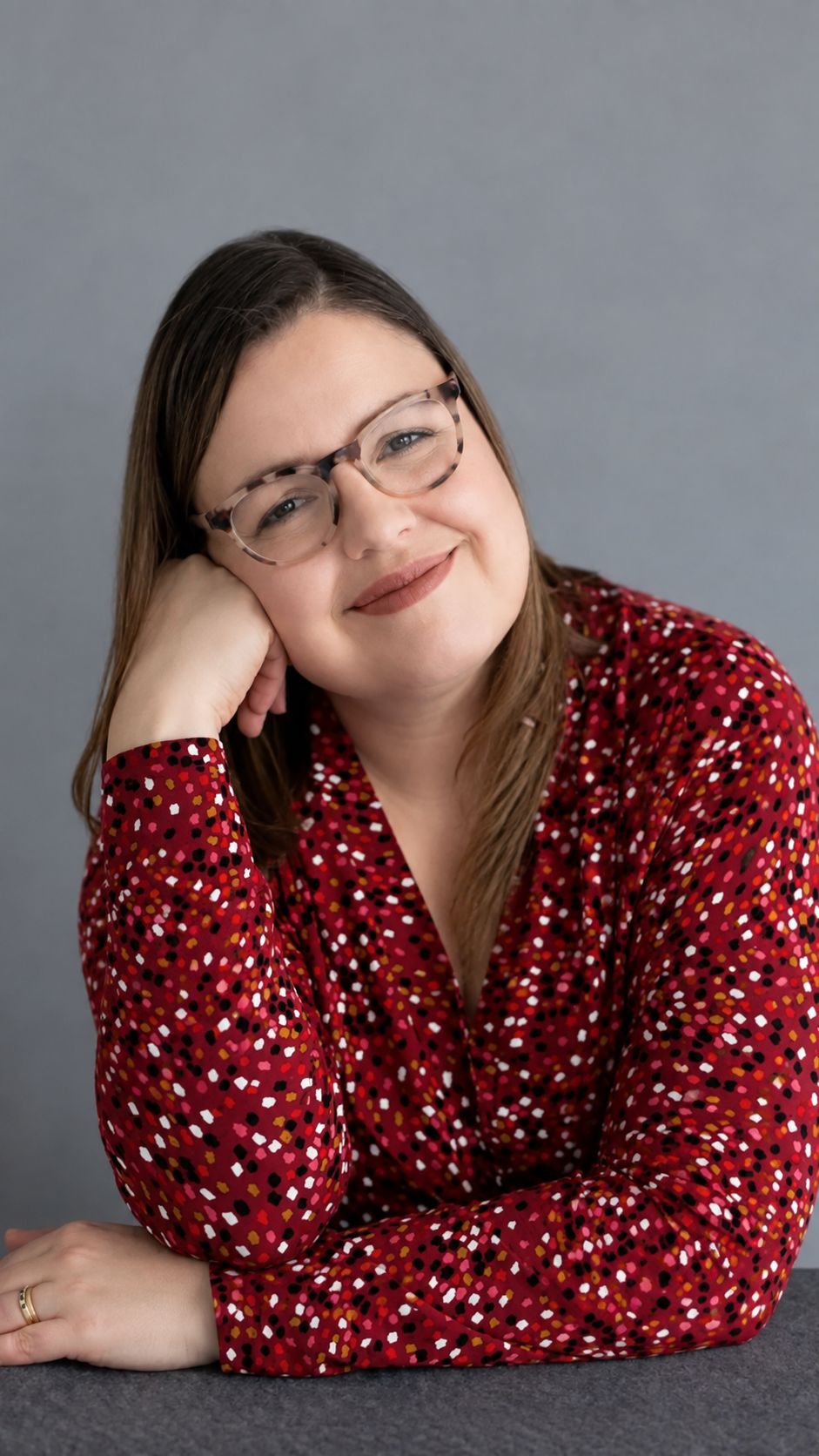
In today’s piece, we turn the spotlight toward one of the most vibrant and passionate advocates of vertical storytelling, Jen Cooper of Vertical Drama Love. If there’s anyone who knows the heartbeat of vertical dramas, from their whirlwind romances to their surprising twists, it’s Jen. With a background in bookselling, she carries with her a deep love for stories and a natural instinct for what resonates with audiences. Now fully immersed in the world of vertical cinema, Jen has carved out a space where creativity, community, and commentary flourish side by side. Her Instagram page is more than just a feed, it’s a daily celebration of the vertical drama universe. From insightful reviews and thoughtful reflections to exclusive interviews with actors, producers, and creators, Jen delivers content that entertains as much as it informs. She hosts fan-voted awards, highlights rising stars, and always sprinkles her signature humor into every post, a little dose of Jen that keeps followers coming back. In a genre that moves fast and evolves even faster, Jen Cooper remains a steady, sparkling guide, authentic, passionate, and always in love with the story.
Before we begin, thank you, Jen, for joining us for this interview. It’s truly an honor to sit down with you and dive into the captivating world of vertical dramas. Your passion, insight, and unwavering support for this modern form of storytelling have not only shaped conversations around the genre, but have also inspired a growing community of creators and fans alike.
Interview
As the founder of Vertical Drama Love, could you tell us about your background and influences, and how your journey led you to create this platform?
Jen: I’ve always loved a good romance movie, whether it’s a period drama, a teen flick, or a Nicholas Sparks adaptation. But in recent years, Hollywood has been making fewer and fewer of them. I discovered Hallmark in 2010 and initially really enjoyed their films. They felt fresh, varied, and surprisingly inventive. But over time, as Hallmark became a parody of itself, I started looking elsewhere. Through Netflix, I stumbled upon Korean and Chinese dramas, beautifully made, with rich storytelling and heartfelt romance. But they’re long: often an hour per episode, and sometimes stretching to 40 episodes or more. Then, in April 2024, I was targeted online by a criminal who threatened both my business and my family. I spent a month in a constant state of high alert, with the police involved. I couldn’t relax, and I couldn’t concentrate on long dramas. One day, while scrolling TikTok, I saw an ad for You Belong with Me on ReelShort. Curious, I clicked the link, watched the show, and I’ve been hooked ever since. It was exactly what I needed: 90-minute romances, fast-paced, pure escapism, and a reliable dopamine hit.
You spent many years as a bookseller. How did that career shape your passion for storytelling, and how did you transition from bookselling into the vertical drama space?
Jen: I’ve always loved a good story and have a strong sense of what makes something commercially successful. During my years as a bookseller, I saw firsthand how audiences respond to certain themes and trends. When Twilight came out, for example, there was a rush from other publishers to find or commission vampire romances, and I understood why. I’ve always had an instinct for the “bones” of a good story and how popular narratives ripple through the industry. I also had a knack for predicting what would take off. I remember telling a manager we should stock the book tie-in for a new thing called High School Musical. He wasn’t convinced, but let me go ahead, and we sold out, again and again. And finally, all those years of watching what some might call “nonsense”: teen movies, every rom-com I could find, global romances, even student adaptations of literary classics on YouTube, it’s all become useful. What once felt like a guilty pleasure is now research. I’ve absorbed so much about story structure, pacing, and emotional payoff simply by being a lifelong fan of the genre. Later, I ran my own business for five years, which gave me the professional skills and technical know-how to build websites, manage content, and create social media campaigns, all of which have been invaluable in transitioning into the world of vertical drama.
You have a wide range of favorite shows and films, from classic literature adaptations to K-dramas and C-dramas. How have these diverse influences shaped the kinds of stories and content you seek out in the vertical drama format?
Jen: I’ve always preferred closed-door romances, stories that focus on emotional connection rather than explicit content. That’s why I was drawn to costume dramas early on, and later to Korean and Chinese dramas. They offered rich storytelling, slow-burn romances, and strong character development, all without relying on sex scenes. That kind of storytelling has become harder to find in the vertical drama space. Honestly, I’m not sure I would’ve stuck with ReelShort if I’d joined now, when so many stories feel over-sexualized. The earlier shows had a certain innocence and heart that really appealed to me. Hollywood isn’t producing many romance films these days, and no one does action-romance quite like Korea. Healer, with Ji Chang-wook and Park Min-young, is my all-time favourite TV show, it’s the perfect blend of suspense, emotional depth, and romance. China, on the other hand, excels at coming-of-age and “found family” stories. Shows like Love So Beautiful and Hidden Love have some of the best romances I’ve seen. They take their time, show love through small acts of service, and often carry a positive, uplifting tone. What draws me in is the universality of falling in love, the idea that people all over the world connect through these shared emotional experiences. I’ve come to appreciate the distinctive storytelling styles too: the humour, the sound effects, the classic tropes like the accidental fall or the surprise kiss. When I watch vertical dramas now, I get the cultural shorthand, the CEO/billionaire tropes, the dramatic gestures, the “kneel and beg” scenes. And while I don’t need everything to be realistic, what matters to me is the writing, the dialogue, the performances, the story itself.

Discovering Vertical Storytelling
When and how did you first discover vertical drama content, and what was it about that initial experience that grabbed your attention?
Jen: So in 2023–2024 I was mainly watching Korean and Chinese dramas. But they’re long, often an hour per episode and sometimes up to 40 episodes. In April 2024, I was targeted online by a criminal who threatened both my business and family. I spent a month in a state of high alert, with the police involved. I couldn’t relax or concentrate on long dramas. One day, while scrolling TikTok, I saw an ad for You Belong with Me on ReelShort. Curious, I followed the link, watched the show, and I’ve been hooked ever since. It was the perfect format for me: 90-minute romances, fast-paced, offering pure escapism and a dopamine hit.
Can you describe the very first vertical drama series you watched? What stood out to you about its storytelling and format?
Jen: The first vertical drama I watched was You Belong With Me on ReelShort, and to be fair, Eric Guilmette taking his shirt off (as the unexpectedly hot uncle of the rejected main guy) definitely caught my attention! But what really stood out was the soapy, high-stakes format. It had this fun, tongue-in-cheek quality while still delivering a genuinely emotional love story at its core. Emma Hular was fantastic in it, and it featured one of my favourite romance tropes: the big, dramatic gesture, the kind you see in films like Chasing Liberty. It was entertaining, fast-paced, and held my attention all the way through. I loved that it felt like a complete story, just in a shorter format. And honestly, it was refreshing to watch American actors for once, no need for subtitles, just easy escapism. The speed and intensity of it were exactly what I needed at the time.
You’ve explored a wide range of vertical dramas on your platform, could you share your top 10 favorite vertical dramas so far?
Jen: The list changes all the time, at the moment it is…
● The Boy I Hate — Reelshort
● Falling For A Superstar — Alta
● My Girl — Candyjar
● My Unwanted Billionare Ex — Shortmax
● My Secret Agent Husband 1&2 — Dramabox
● Found You Heart Thief — Dreameshort
● The Evil Stepmom Survival Guide — Kalos/Minishorts
● The Quarterback Next Door — Reelshort
● Driven To Love — Stardust
● Fated To My Billionaire Call Boy — Dramawave
● After I Sold My Special Service To A Billionaire — Dreameshort
Your passion for vertical drama really shines through in your posts and reviews. Along the way, have you built any friendships or connections within the vertical drama industry, whether with creators, actors, or behind-the-scenes talent? We’d love to hear a few names and how those relationships came about.
Jen: One of the things that’s really struck me about the vertical drama space is how genuinely supportive everyone is, both the industry professionals and the fans. When I first started my Instagram account, I was just asking questions in the comments: How are these filmed? Do you bring your own costumes? I was amazed when actors and actresses from the shows actually reached out to me directly to share their experiences and answer my questions. I think people in the industry appreciated someone coming in with genuine curiosity, celebrating the hard work behind these productions, and seeing their potential, and they responded with kindness and openness. The same goes for the fan community. Most of us don’t know anyone in our day-to-day lives who also watches vertical dramas, so finding each other online has made the world feel smaller and more connected. I now have a surprisingly strong sense of what time it is around the world, as friends in Australia, Europe, North and South America wake up, go to sleep, and chat about the latest shows. It’s been an unexpected and wonderful gift. And no, I’m not naming names, because I’d hate to leave anyone out! There are too many lovely people to count.
Cultural and Emotional Impact
Why do you think vertical dramas have become so popular? What is it about this format that resonates with audiences today, especially compared to traditional TV or streaming series?
Jen: Vertical dramas offer something audiences are craving right now: emotional escapism. In a world that often feels overwhelming, we turn to stories that allow them to switch off from day-to-day stresses and immerse themselves in something uplifting, entertaining, and emotionally satisfying. The format delivers quick bursts of dopamine, fast-paced storytelling, high stakes, and emotionally charged scenes that hold attention and offer instant gratification. Unlike traditional TV or streaming series, which require longer time commitments, vertical dramas fit seamlessly into busy lives. They’re always accessible, designed for mobile, and can be watched anytime, anywhere. There’s also a timeless appeal in the kinds of stories vertical dramas often tell: tales of adversity overcome, good triumphing over bad, and characters finding love, justice, or redemption. These narratives resonate because they offer hope, and often, a happy ending. In short, vertical dramas tap into a universal need: to feel better. They offer not just entertainment, but a welcome emotional reset, something many people today are actively seeking.
Vertical dramas often use cliffhangers and melodramatic tropes (like billionaire romances or secret identities) to hook viewers. Why do you think these themes and storytelling devices work so well on mobile screens?
Jen: I think part of the appeal of vertical dramas on mobile is that almost everyone has a phone, no matter where they are in the world, and they carry it with them all the time. Unlike sitting down to watch something on TV, which requires a conscious decision and more of a time commitment, vertical dramas are always right there in your pocket. You can watch them whenever and wherever you want. Some people worry that this trend shows we’ve lost the ability to concentrate for long periods. But honestly, I find it’s the opposite. When I’m watching something on TV, I’m often also scrolling on my phone or doing something else. But when I’m watching a vertical drama on my phone, it actually has my full attention. The format is fast-paced, the cliffhangers pull you in, and the melodramatic tropes, like billionaire romances or secret identities, work brilliantly in short bursts. They’re designed to keep you engaged and emotionally invested, and they do that incredibly well.
How do you think the viewing experience of a vertical drama differs emotionally from traditional TV or film? For example, does watching a story on a personal phone change how viewers connect with the characters or the narrative?
Jen: Watching vertical dramas on your phone definitely creates a more personal, intimate experience. One thing I’ve noticed is how much easier it is to see what’s happening on screen, especially compared to watching traditional TV or Netflix shows on a phone, where you often have to turn the screen sideways and still end up squinting. Vertical dramas are designed for mobile viewing, and that makes a big difference in how immersed you feel. You also feel closer to the characters, literally and emotionally. There’s something about having the story unfold in the palm of your hand that makes it feel more immediate and engaging. And then there’s the escapism. The world feels heavy enough right now; most of us don’t need more hard-hitting content in our downtime. Everyday life is intense enough. When I watch vertical dramas, I want to switch off, get pulled into a story, and come away feeling better, not worse.
The vertical drama market is growing rapidly and has been called “TV for the TikTok generation.” How do you see vertical storytelling fitting into the broader entertainment landscape, and have you noticed any particular audience demographics or trends?
Jen: Right now, the vertical drama audience is largely female, which makes sense, given the romantic and emotionally-driven nature of many of the current storylines. But one of the big challenges moving forward is widening that audience and bringing in new viewers. One clear way to do that is by improving diversity in casting. People want to see characters who look like them, who reflect their experiences and identities. Representation matters, not just for inclusion, but because it makes stories feel more real and relatable. Another important step is expanding the range of genres. There’s so much untapped potential in vertical storytelling for mystery, detective stories, horror, and comedy. Broadening the types of stories being told will help attract a more varied audience and cement vertical drama as a lasting part of the wider entertainment landscape, not just “TV for the TikTok generation,” but a new and dynamic form of storytelling in its own right.
As the format matures, how do you envision vertical dramas evolving? Do you expect to see a wider range of genres or storytelling styles emerge, or new formats (such as longer episodes or different release models)?
Jen: As the vertical drama format continues to mature, I definitely see space for more ambitious storytelling, especially in terms of world-building. There’s a real opportunity to create interconnected stories: spin-offs, sequels, even shared universes across different vertical series. Just like traditional TV has done with franchises and expanded worlds, vertical dramas could evolve in a similar way, with characters or storylines crossing over into new shows. I also expect to see a broader range of genres emerging. While romance has dominated so far, and it works really well in the format, there’s no reason we can’t see successful vertical dramas in mystery, sci-fi, fantasy, horror, comedy, or even documentary-style storytelling. As the audience grows, so will the appetite for variety. The format is still young, but it’s incredibly flexible. That’s what makes it exciting. It’s not just a new way of watching content, it’s a whole new way of telling stories.
As someone deeply immersed in the vertical drama space, is there anything you would like to see done differently in today’s vertical dramas? Are there specific themes, tropes, or trends you find overused or problematic, and what kind of change would you advocate for?
Jen: While the rapid growth of vertical drama is exciting, the format is still in its early stages. Much of what’s being created is shaped by formulas developed in other markets, particularly China. While successful there, these approaches don’t always translate effectively to a global audience, where cultural norms and viewer expectations differ. This has led to content that can feel jarring or, at times, problematic. One of the most troubling trends is the increase in graphic violence, particularly violence directed at women. Some recent releases include prolonged scenes of abuse and sexual content with little narrative justification. These scenes are often included for shock value rather than meaningful storytelling, and in some cases, may cross ethical lines. Platforms need to be more accountable, particularly given that most currently lack content warnings or age restrictions. With a growing and diverse viewership, clearer guidelines and safeguards are essential. There is a persistent overuse of toxic male character tropes, with coldness, cruelty, and emotional manipulation too often framed as romantic. While some progress is being made, with more emotionally available and respectful male leads emerging, there is still work to do. Complex characters can exist without glorifying harmful behaviour. While there is nothing wrong with romance that includes sensual or sexual elements, many recent shows have leaned too heavily on explicit scenes, often without emotional depth. What’s missing in these cases is connection, characters that are believable, emotionally engaging, and written with care. The increasing influence of “spicy” content popularised on platforms like BookTok may be part of this trend, but translating such material to screen brings different responsibilities. Real-life actors, directors, and production teams must handle this content thoughtfully, and not all current productions are meeting that standard. Despite vertical dramas attracting a global audience, diverse casting is still notably lacking. Non-white leads remain rare, and when actors of colour are cast, they’re often limited to minor or stereotyped roles. This doesn’t reflect the international reach of the medium, and limits its potential. A more inclusive approach to casting, beyond tokenism, is not just important for representation; it’s also commercially smart. Audiences want to see a broader range of people in lead roles, without the diversity itself becoming the story. Another concerning trend is the rise of “slimming” and “XXL wife” storylines. These narratives frequently imply that love must be earned through physical transformation, a damaging message, particularly for younger audiences. There is a clear need for more stories that promote body positivity and affirm people’s worth as they are. The vertical drama space has incredible creative potential. But to realise it, platforms and creators must be more intentional about the content they produce. As the audience grows, so too does the impact of these stories, and the responsibility that comes with them. The most successful vertical dramas are those that balance entertainment with emotional depth. They don’t rely on shock or sensationalism; instead, they deliver meaningful narratives, compelling characters, and a sense of escapism that lifts rather than diminishes. As viewers, we play a part too. People need to stop watching these shows. Support high-quality storytelling, and ignore content that crosses the line, this is what will help bring about a change in vertical storytelling, and eliminate the problematic aspects.
Finally, looking ahead, what are you most excited about in the future of vertical storytelling, and are there any upcoming projects or directions for Vertical Drama Love that you can share?
Jen: One of the projects I’m most looking forward to is VertFest, an online celebration of all things vertical drama, taking place 30–31 August. It will spotlight creators, showcase standout work, and bring fans together from around the world. The Vertical Drama Love website is also expanding as a trusted hub for curated reviews, articles and industry news , helping viewers discover the best the format has to offer. We’re focusing on quality storytelling and highlighting series that deserve more attention. On YouTube, I’m working to bridge the gap between creatives and audiences, offering behind-the-scenes insights, interviews, and additional content to deepen fan engagement and build visibility for the people making these stories happen. Ultimately, the goal is to build a community that feels welcoming, inclusive, and empowering. By celebrating great work, I hope to contribute to better practices in the industry, more opportunities for creators, and the film industry as a whole.
Jen, thank you so much for taking the time to share your story, your insights, and your passion for vertical storytelling. Your journey, from the world of books to the fast-moving frame of vertical dramas, has not only shaped Vertical Drama Love into a vibrant and trusted platform, but has also helped elevate an entire genre still finding its voice. Through your honest reviews, thoughtful criticism, and unwavering enthusiasm, you’ve become a guiding light for both creators and fans. You’ve reminded us that storytelling, in any format, thrives on connection, care, and courage. We’re incredibly grateful for this conversation and excited to see where Vertical Drama Love goes next. From VertFest to your growing digital presence, your work continues to inspire, and we’ll be cheering you on every step of the way.


Press enter or click to view image in full size