
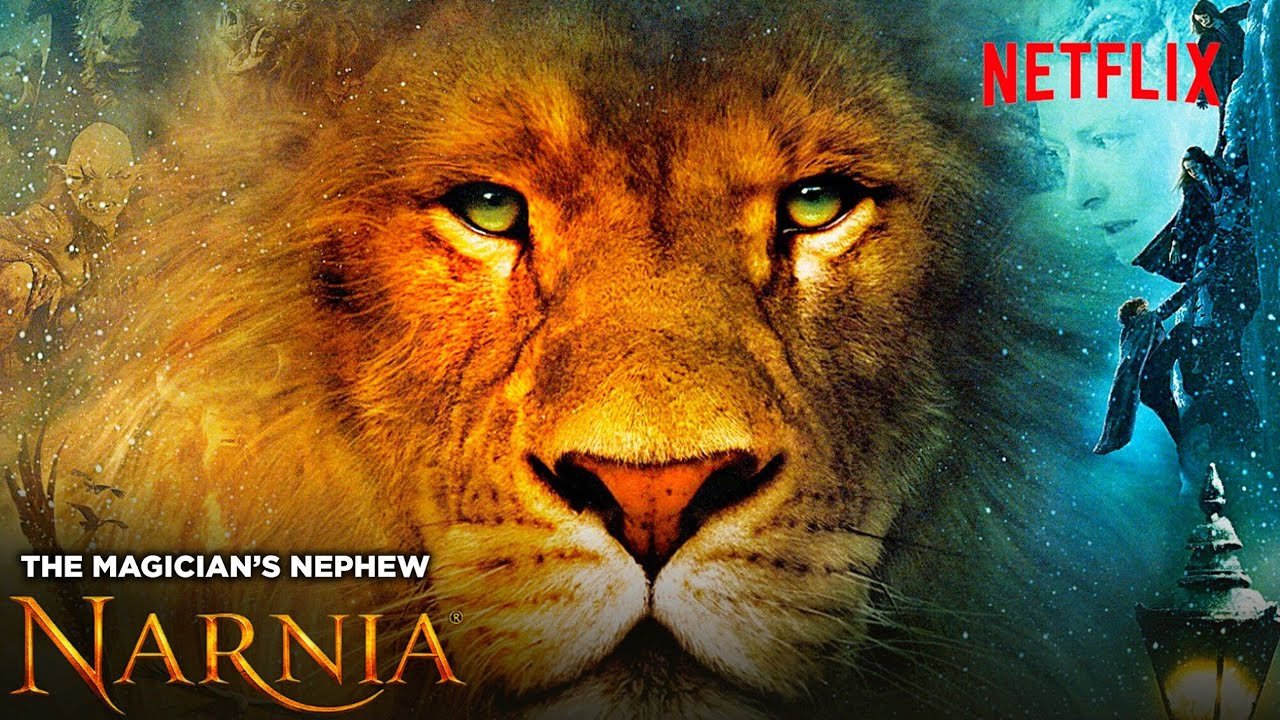

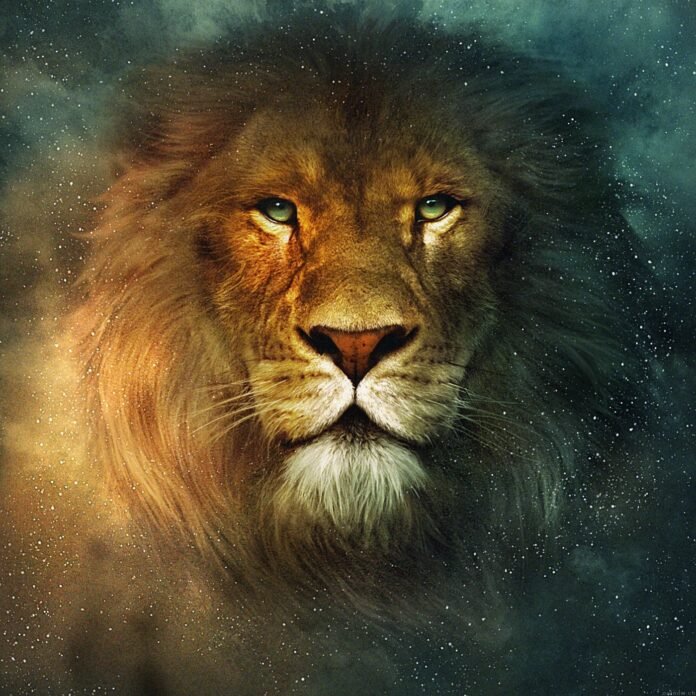
Greta Gerwig is about to film the beginning of Narnia. Here is what she’s holding in her hands, and why it matters more than $280 million.
I have read The Magician’s Nephew more times than I can honestly count. First as a boy who wanted the rings. Then as a teacher, reading it aloud to classrooms that went completely silent at the singing. Now as a critic, with a pencil, trying to understand why a short book written by an Oxford don in 1955 still feels like it was carved out of something older than the language it’s written in.
So when the news landed that Greta Gerwig is writing and directing a $280 million adaptation for Netflix, with IMAX sneak previews on February 10, 2027, a wide theatrical release from February 12, and streaming from April 2, I didn’t feel the excitement of a fan first. I felt the caution of a reader. Because this isn’t a sequel or a spin-off. This is the origin. This is the book that explains everything else.
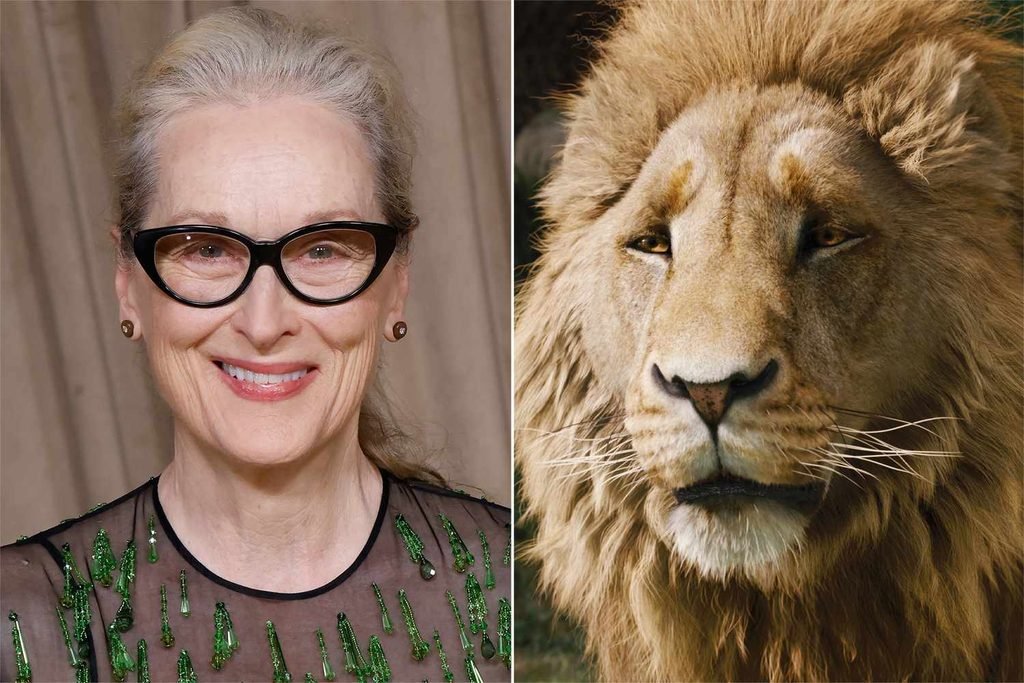
The cast is loud in the best way. Emma Mackey as Jadis, the White Witch, reimagined with a rock-and-roll edge Gerwig says is inspired by David Bowie. Daniel Craig as Uncle Andrew. Carey Mulligan as Mabel Kirke. And Meryl Streep as the voice of Aslan, a choice Gerwig has defended as giving the lion “gravitas” and “fresh wonder.” I’ll come back to that one. It’s the biggest swing in the whole production, and not everyone is going to land on the same side of it.
But first: what is this book, really?
The door before the wardrobe
Most people meet Narnia through a wardrobe. Lewis wanted you to meet it through a pool.
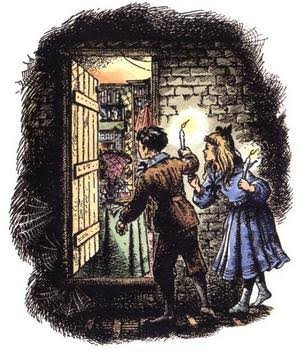
London, 1900. Digory Kirke, a boy whose mother is dying, and Polly Plummer, the girl next door, stumble into the attic study of Digory’s Uncle Andrew, a man who has spent his life trying to be a magician and has mostly succeeded at being a coward. He tricks them with a pair of yellow and green rings, and they fall out of our world into the Wood between the Worlds: a drowsy, silent forest full of shallow pools, each one a doorway to a different universe.
It is one of the strangest and most beautiful inventions in all of fantasy. A multiverse before we had the word. A waiting room between realities so peaceful you forget where you came from.
One pool leads to Charn, a dead city under a dying red sun, where a hall of frozen kings and queens ends in a woman taller and prouder and more terrible than all of them. Digory, being a boy, rings the bell he’s told not to ring. Jadis wakes. And the children accidentally drag a genocidal empress back to Edwardian London, where she tears the crossbar off a lamp-post and rides a hansom cab through the streets like a comet.
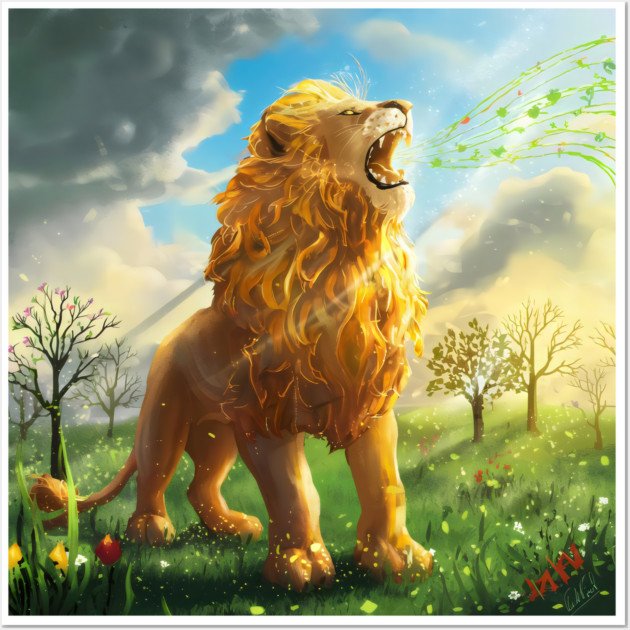
Then the real story begins. Trying to send her home, the children, Jadis, Uncle Andrew, a cabby named Frank and his horse all tumble into a world that doesn’t exist yet. Darkness. Silence. And then a voice, singing. Stars come out to join the song. A sun rises. Grass spreads across the ground like a green wave. Trees push up out of the earth. And a great golden lion walks through the newborn land, singing it into being.
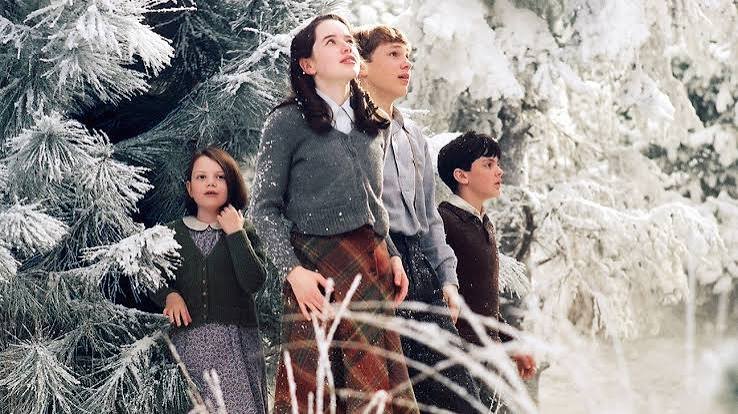
Jadis hurls the iron bar at his head. It bounces off, falls into the soil, and grows into the lamp-post Lucy will find forty years later, still burning in the snow.
By the end, Digory has retrieved a silver apple from a walled garden, resisted the Witch’s temptation to steal it for his mother, and been rewarded with a fruit that heals her. He buries the core in his back garden. Decades on, the tree that grows from it is blown down in a storm, and the old professor has it made into a wardrobe.
Everything in Narnia comes from this book. The Witch. The lamp-post. The professor who doesn’t blink when four children tell him about a country inside his furniture, because he was there when it was born.
A lion called Aslan
The name Aslan is a small, perfect example of how Lewis worked. It’s Turkish. It literally means “lion.” Lewis found it in the notes to Edward Lane’s translation of the Arabian Nights, and he used to tell the children who wrote to him that he pronounced it “Ass-lan.” No mystery. No invented tongue. A real word from a real language, chosen because it sounded like what it was.
But the choice of a lion was not casual. Lewis was a Christian, and a deliberate one. He’d lost his faith as a teenager after his mother’s death, spent his twenties as a hard atheist, and came back slowly and grudgingly, later describing himself as the most reluctant convert in all England. When a man like that decides to write the figure of Christ into a fairy tale, he does his reading. And in the Book of Revelation, when heaven is searched for someone worthy to open the sealed scroll, the one who steps forward is called the Lion of the tribe of Judah.
Aslan is that lion. Not a vague symbol for God. Lewis was explicit: Aslan is what Christ would be if he came to a world of talking animals. The golden mane, the terror and the tenderness, the fact that he is, as Mr Beaver puts it, not safe, but good.
Not a sermon. A supposal.
Here is where people get Lewis wrong, and where I think Gerwig’s film will live or die.
Lewis did not sit down to write a Christian children’s book. He was allergic to the idea. He had spent his adult life as a scholar of medieval literature and as a public defender of Christianity, and he knew exactly why so many people found religion unbearable: it arrived wrapped in obligation, lowered voices, stained glass and Sunday school. You were told you must feel reverence, and the telling killed the feeling.
His answer was to smuggle. In a 1956 essay he asked whether the fairy tale, stripped of all its churchy associations, could steal past what he called the “watchful dragons” guarding the adult heart. Could a reader fall in love with a lion before realising who the lion was?
That’s why Narnia is not, strictly speaking, an allegory, and Lewis himself pushed back on the word. Allegory is a code: this stands for that. Narnia is what he called a “supposal.” Suppose there were a world like this one. Suppose God chose to enter it. What would that look like? Aslan doesn’t represent Christ. Within the logic of the story, he simply is Christ, in another country, wearing another shape.
Lewis laid the whole design out once, in a 1961 letter to a young reader who asked. The Magician’s Nephew is Creation and how evil entered the world. The Lion, the Witch and the Wardrobe is the Crucifixion and Resurrection. Prince Caspian is the restoration of true belief after corruption. The Horse and His Boy is the calling of an outsider. The Voyage of the Dawn Treader is the spiritual life. The Silver Chair is the long war against darkness. The Last Battle is the Antichrist, the end of the world, and the Judgement.
He never printed that map. He didn’t want you reading the books with it in your hand. He wanted you to feel it first.
Genesis, sung
Read The Magician’s Nephew next to the first pages of the Bible and the echoes come thick.
The world is made by a voice. In Genesis, God speaks light into being; in Narnia, Aslan sings it, and Lewis is surely thinking of the Book of Job, where the morning stars sing together at the founding of the earth. The stars in Narnia don’t just appear. They join in.
There is a garden on a hill, walled, with a gate, and inside it a tree whose fruit must not be taken for yourself. There is a tempter waiting. Jadis has already eaten, and the apple has given her exactly what the serpent promised Eve: she will not die. It has also turned her skin corpse-white and filled her with a misery she’ll carry for a thousand years. She is Eve and serpent in one body. Digory, facing the same fruit and a far crueller version of the same temptation, because the life he could save is his mother’s, says no. Lewis rewrites Eden with the fall refused.
Then there’s Frank the cabby and his wife Helen, pulled out of London and crowned the first King and Queen of Narnia. Adam and Eve, but working-class and kind. Lewis had a lifelong affection for ordinary people who were simply decent, and he gave the throne of his new world to a man who talks to his horse.
And the mother. This is the part of the book I can’t read without slowing down. Lewis’s own mother, Flora, died of cancer when he was nine. There was no apple. When Digory looks up at Aslan and begs for help, Lewis writes that great tears stood in the lion’s eyes, so big and bright that for a moment the boy felt the lion was sorrier about his mother than he was himself. Grief is great, Aslan tells him. In a book about the making of a universe, the most powerful being in it stops to weep with a child. Anyone who knows the shortest verse in the Gospels, Jesus wept, knows exactly where that scene comes from.
The pattern runs through the whole series. In The Lion, the Witch and the Wardrobe, Aslan gives himself up on the Stone Table to save Edmund, a traitor, which is to say, to save all of us. The table cracks at dawn the way the temple veil tore. Two girls, Susan and Lucy, keep vigil and are the first to see him alive, as the women were at the tomb. He breathes on the Witch’s stone statues and they come back to life, because breath in scripture is always the mark of the Spirit. And in The Last Battle, old Narnia ends and a truer one is revealed behind it, further up and further in, which is Revelation’s new heaven and new earth almost line for line. Lewis even borrows Plato: our world and the old Narnia were the Shadowlands. The real one was waiting the whole time.
Why children
Why put all this in the hands of children?
Because for Lewis, childhood wasn’t an audience. It was an instrument.
The clearest proof is in this very book. When Aslan sings, Digory and Polly hear beauty. They feel the holiness of it before they can name it. Uncle Andrew, standing a few feet away, hears the same song and, out of fear and greed, convinces himself it’s only the roaring of beasts. By the end of the scene he genuinely can’t hear the words any more. He has talked himself deaf. Lewis is dramatising the line from Matthew that unless you become like a little child you cannot enter the kingdom, and he makes it psychological rather than pious. Adults build walls. Wonder needs an open door.
There’s a real-world root too. In September 1939, with war declared and the bombing of London expected any day, thousands of children were evacuated to the countryside, and four girls were billeted at Lewis’s house, the Kilns, outside Oxford. They were bored and frightened and far from home. He started telling them a story about a wardrobe. That is how Narnia began: not with theology, but with a forty-year-old bachelor trying to make displaced children feel less afraid.
And there was the matter of taste. Lewis and Tolkien, reading their drafts to each other at the Inklings, both felt modern fiction had gone grey and clinical. Lewis argued that the fairy tale was the most flexible form literature had ever invented, and that grown-ups had abandoned it out of embarrassment. He admitted that at ten he read fairy tales in secret and would have been ashamed to be caught, and that at fifty he read them openly. He wrote the books he wanted to read, and he trusted that a story lean enough for a child could carry ideas too heavy for most adult novels.
The problem of susan
No honest review of Narnia gets to skip this.
In The Last Battle, the friends of Narnia die in a train crash: Peter, Edmund, Lucy, Digory, Polly, Eustace, Jill. Aslan gathers them into his country, and the ending is an ascension, not a tragedy. But one Pevensie isn’t on the train. Susan has stopped believing. She calls Narnia a game they played as children, and she’s described, in one of the most argued-over lines in children’s literature, as caring about nothing now but nylons and lipstick and invitations.
Philip Pullman found it poisonous. Neil Gaiman wrote a whole short story about it. J.K. Rowling has said it bothered her. I understand all of them. Read carelessly, it looks like a girl being punished for growing up.
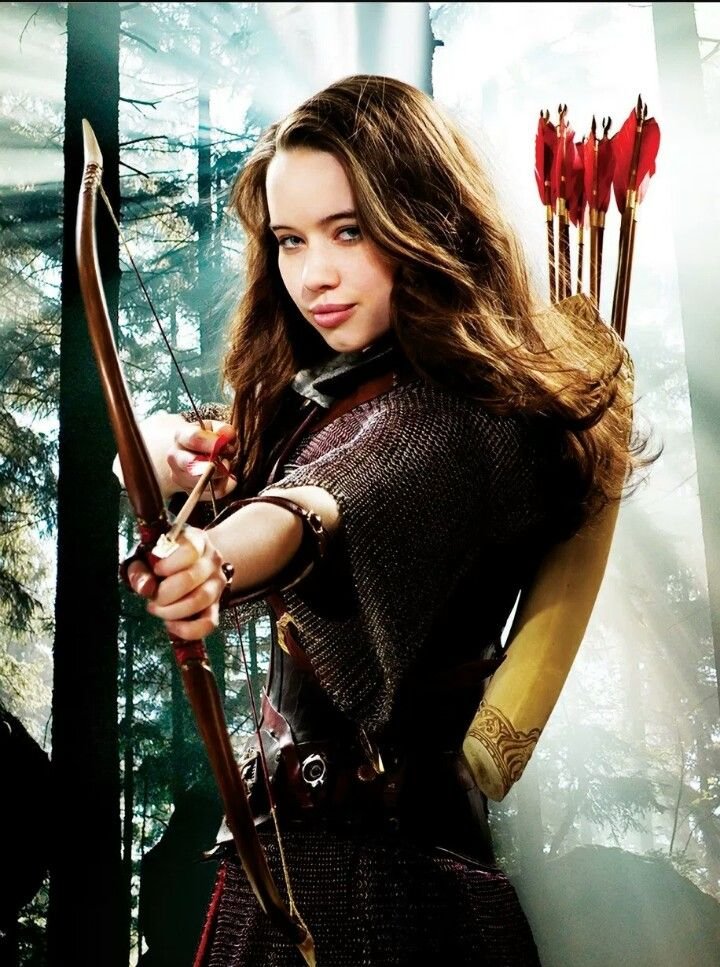
But Lewis’s own letters tell a different story. When a young reader asked him about Susan, he answered that she was left alive in this world, that she’d become rather silly and conceited, and that there was plenty of time for her to mend. She is not damned. She is unfinished. She’s left standing on a railway platform having lost her entire family in one afternoon, which is a far crueller and more interesting fate than damnation, and the one thing Lewis knew something about. To another reader he admitted he couldn’t write Susan’s story himself; it would be a longer, more grown-up novel than he wanted to write. Why not try it yourself, he suggested.
Gerwig’s film won’t reach The Last Battle. But the seed of it is already in The Magician’s Nephew: the choice between wonder and cynicism, between taking the fruit and refusing it. Susan simply took the other path.
The lion’s long shadow
It’s hard to overstate what these seven short books did to the century that followed.
Over a hundred million copies. Translations into nearly fifty languages. An entire genre, the portal fantasy, that barely existed before the wardrobe and is everywhere after it. Rowling has said she had Narnia in her head when Harry is told to run at the barrier on platform nine and three-quarters. Lev Grossman built The Magicians as a grown-up argument with Narnia, right down to its own hidden world of Fillory. Pullman wrote His Dark Materials in part as a furious reply. Even the writers who hated Lewis had to write through him. That’s what influence looks like when it’s real.
Andrew Adamson’s 2005 film made close to three-quarters of a billion dollars and proved the audience was still there. Then the franchise wandered, the sequels softened, and Narnia went quiet for a decade. Netflix bought the rights in 2018. Gerwig came aboard in 2023. Now we’re a few months from the first film of a new cycle, and it starts, correctly, at the beginning.
The review
Here is my honest reading, as a writer, a teacher, and a critic who has spent a lot of years with this book.
The Magician’s Nephew is the strangest of the seven and quietly the best. It has more imagination per page than anything else Lewis wrote: the Wood between the Worlds, the dead city of Charn, a witch riding a cab through London, a horse growing wings. It has the funniest villain in Uncle Andrew, a man never quite evil enough to be frightening and never quite good enough to be forgiven. And it has the deepest grief, because underneath the creation of a universe is a nine-year-old boy at his mother’s bedside, and the boy is Lewis.
It’s also a warning. Charn was destroyed by a single word, spoken by a ruler who preferred a dead world to a shared one. Aslan tells the children that their own world may one day find a secret just as terrible. Lewis published that in 1955, ten years after Hiroshima. He knew exactly what he was saying.
That is what Gerwig has been handed. And I’ll be honest about my worries, because that’s the job.
A rock-and-roll Jadis I can see. Jadis is glamour and destruction in one body; Bowie isn’t a bad reference for a woman who walks into 1900 London and treats it as a stage. Daniel Craig as Uncle Andrew is inspired casting, if he plays the fear and not just the comedy. Carey Mulligan as Mabel Kirke means the mother will be a person and not a plot device, and that matters more in this book than in any other.
Meryl Streep as Aslan is the question. She is one of the great voices in cinema, and if anyone can carry gravitas and fresh wonder in the same breath, it’s her. But Aslan is not a character you recast freely. He is the whole point. Lewis built him deliberately, from scripture and from grief, and for seventy years readers have heard a very particular voice in their heads when he says that grief is great, or that he is not safe, but good. Gerwig is betting the wonder survives the change. I hope she’s right. I’m not certain.
Because this is the thing about Narnia. It isn’t a property. It’s a testimony disguised as a fairy tale, written by a man who wanted children to feel something true before anyone could tell them it was religious. The magic isn’t in the multiverse or the witch or the $280 million. It’s in a lion crying with a boy.
The Magician’s Nephew is where the whole story begins. And with Greta Gerwig making this movie, I hope she doesn’t mess it up. A franchise this big doesn’t need experiments. These stories are beautiful exactly the way Lewis wrote them.



This is amazing
Thank you. Stay tunned for future articles