
The Genesis of Vertical Drama
In less than a decade, vertical dramas have moved from social media novelty to a multi-billion-dollar force redefining global entertainment. What began as an intuitive response to smartphone behavior, viewers reluctant to rotate their screens, evolved into a fully structured narrative format with its own grammar, economics, and audience psychology. The vertical drama did not emerge as a disruption of cinema, but as a product of technological adaptation: storytelling redesigned for the palm of the hand.
The origins trace back to 2018 in China’s dynamic short-form ecosystem, where platforms like Douyin and Kuaishou observed rising engagement with scripted, vertically framed content. The release of Useless Man (生活对我下手了) marked a pivotal shift. No longer mere user-generated sketches, micro-dramas (微短剧) entered the realm of professional production, tight, serialized narratives delivered in rapid, minute-long installments. The format proved that emotional intensity could replace duration, and that narrative compression could rival traditional episodic television.
The West’s attempt to upscale the format came in 2020 with Quibi, a billion-dollar experiment that sought to merge Hollywood prestige with mobile convenience. Despite technological innovation, including its “Turnstyle” viewing feature, the platform collapsed within months. Its failure revealed a crucial truth: vertical audiences did not want condensed cinema, they wanted native storytelling. Fast. Addictive. Engineered for scrolling.
The modern explosion arrived in 2022 with platforms like ReelShort, which embraced melodrama, cliffhangers, and unapologetic emotional hooks. Drawing from soap opera traditions and Chinese micro-drama structures, these productions mastered a new rhythm: a major narrative twist every thirty seconds. The business model, micro-payments and ad-supported consumption, mirrored mobile gaming more than streaming giants, signaling a structural shift in how stories are monetized.
By 2024, vertical dramas had established themselves as a global entertainment powerhouse. Their success confirms a broader cultural evolution: storytelling no longer adapts audiences to screens; screens now dictate the architecture of stories. The vertical frame is not a limitation, it is a language. And in that language, immediacy reigns.
The Beginning of a New Era
But what exactly are vertical dramas?
Vertical dramas, also known as micro-dramas or short dramas, originating from China’s wei duanju (微短剧), represent a radical rethinking of serialized storytelling. They are not simply shorter television episodes; they are narratives engineered specifically for the smartphone era. Shot entirely in vertical format, these productions align with the natural way audiences hold their devices, eliminating the need to rotate the screen and immersing viewers directly into a mobile-first experience.
What distinguishes them most dramatically is their episodic structure. While traditional series and soap operas range from 30 to 50 minutes per episode, vertical dramas compress their storytelling into installments lasting just 60 to 90 seconds. Despite their brevity, these episodes are densely packed with emotional tension, cliffhangers, and rapid narrative progression. Every second counts. There is no room for filler, only momentum.
Perhaps even more astonishing is the production model behind them. Unlike conventional television series that may require months of filming, vertical dramas are often shot within 7 to 10 days. Entire seasons are wrapped in little more than a week. What initially seems implausible has become part of the format’s efficiency-driven DNA. Speed does not dilute impact; instead, it fuels an industry built on immediacy, adaptability, and relentless pacing.
The plots of these vertical dramas feel like a hybrid between the extreme emotional intensity of Turkish soap operas and the romantic, love-driven storytelling of Spanish telenovelas. They combine dramatic betrayals, family conflicts, and shocking twists with passionate love stories and fairy-tale endings. The result is a highly emotional narrative style that keeps audiences hooked through constant drama and romance.
Short in length but expansive in emotional intensity, vertical dramas are not merely a passing trend. They signal the beginning of a new storytelling era, one defined by vertical frames, compressed time, and narratives designed to captivate in the space between swipes.
What Did Vertical Dramas Offer Fans in the Beginning?
At their core, early vertical dramas offered something traditional television could not: immediacy.
When micro-dramas (wei duanju) first emerged in China’s mobile ecosystem around 2018, they met audiences exactly where they already were, scrolling on their phones. Fans didn’t need to commit 45 minutes to an episode or sit in front of a television. Stories unfolded in 60-second bursts, perfectly designed for commutes, lunch breaks, or late-night scrolling. It was storytelling without interruption to daily life.
They also offered instant emotional gratification. Unlike conventional dramas that build tension slowly, verticals delivered dramatic confrontations, shocking revelations, romantic sparks, or betrayals almost immediately. Within the first 30 seconds, viewers were hooked. That rapid-fire structure felt addictive, each episode ending on a cliffhanger engineered to prevent a swipe away.
Another key element was accessibility. Many early vertical dramas were free or low-cost, supported by ads or micro-payments. This democratized serialized storytelling. Viewers who might not have subscribed to major streaming platforms could still consume high-intensity narratives at their fingertips.
But perhaps most importantly, vertical dramas offered guilty pleasure without judgment. They leaned unapologetically into heightened tropes, secret billionaires, revenge plots, forbidden romances, supernatural twists. They were dramatic, exaggerated, emotionally raw, and they knew it. In a world saturated with prestige television, verticals embraced melodrama as entertainment, not something to be toned down.
In the beginning, vertical dramas gave fans speed, accessibility, and emotional excess. They weren’t asking audiences to slow down and reflect, they were asking them to feel, instantly. And in the age of the smartphone, that was exactly what viewers wanted.
From China to America, And Then to the World
The rise of vertical drama did not remain confined to China for long. What began as wei duanju (微短剧) within platforms like Douyin quickly revealed something far more powerful than a regional trend, it was a format built for the global smartphone generation.
China perfected the model first: short episodes, high emotional stakes, rapid cliffhangers, and monetization through micro-payments. The production system became efficient, almost industrial, capable of delivering entire seasons within days. As engagement numbers surged and revenues climbed into the billions, the format attracted international attention. The question was no longer whether vertical storytelling worked, but whether it could travel.
The true global breakthrough arrived in 2022 with platforms like ReelShort, which adapted the Chinese micro-drama formula for Western audiences. Instead of chasing awards, these platforms embraced high-tension romance, revenge plots, secret heirs, billionaires, and supernatural twists. They localized casting and language while preserving the addictive narrative rhythm: a hook every thirty seconds.
From there, the expansion was rapid. The United States became a production hub, Europe followed with localized versions, and Southeast Asia integrated the model seamlessly into its already thriving mobile culture. Vertical drama was no longer a Chinese innovation being exported, it had become a global format with regional flavors.
In less than five years, vertical storytelling evolved from a domestic experiment into a worldwide entertainment engine. It crossed borders not through prestige, but through universality: smartphones are everywhere, and so is the human appetite for fast, emotional stories.
The American Beginning: The Faces That Built the Format
When vertical dramas began gaining real momentum in the United States around 2022, they quickly developed their own identity, distinct from their Chinese origins yet rooted in the same fast-paced, emotionally charged formula.
The early American verticals centered on themes that translated seamlessly to Western audiences: secret billionaires living double lives, contract marriages that turned into obsessive romances, revenge against cruel families, mafia dynasties, forbidden office affairs, and supernatural love stories involving alphas, vampires, and hidden heirs. These weren’t subtle indie dramas, they were high-stakes, high-emotion narratives designed to hook viewers within seconds. Every episode delivered confrontation, heartbreak, or desire almost instantly.
But formats don’t rise alone, faces make movements real.
A core group of actors emerged as the pioneers of the American vertical wave. Performers such as Jarred Harper, Jackson Tiller, Kasey Esser, Eric Guilmette, Noah Fearnley, Nick Rittaco, Kyra Wisely, Candace Mizga, and Ashley Michelle Grant became recurring presences in early hit productions. Through multiple releases and back-to-back projects, they helped establish the emotional tone and performance style that defined the format.
What made these actors pioneers was their adaptability. Vertical dramas demanded an entirely new rhythm of performance: heightened emotional delivery within extreme close-ups, rapid production schedules often wrapping in under ten days, and the ability to convey full character arcs through fragmented, minute-long scenes. There was no time for slow character evolution, every look, every breath, every confrontation had to land immediately.
These early veterans also built something equally important: fan loyalty. Because vertical dramas lived on apps and social platforms, audiences followed actors across projects in real time. The relationship between performer and viewer became more direct, more immediate. Actors weren’t just appearing in shows, they were becoming digital-era leads of a new storytelling system.
The American beginning of vertical drama was not about replicating Hollywood television. It was about creating a new star ecosystem, one built on speed, intensity, and proximity to the audience. And these early performers didn’t just participate in the movement, they paved the path for the industry that followed.
The Actors Who Shaped the Vertical Drama Era
As vertical dramas began to take root in the United States, the format quickly attracted a diverse wave of performers, some seasoned actors, others newcomers searching for a breakthrough in a rapidly evolving industry. What emerged was an unexpected fusion of talent from different corners of entertainment: actors trained in indie cinema, performers with television backgrounds, models transitioning into acting, and social media personalities stepping into scripted storytelling.
Unlike traditional television, vertical dramas did not wait for the industry to formally recognize them. Instead, they became a testing ground where actors could experiment with a new rhythm of performance, one that demanded immediacy, emotional intensity, and the ability to deliver powerful moments within seconds. The tight framing of the vertical screen turned subtle expressions into dramatic focal points, and actors had to adapt quickly to this accelerated storytelling language.
Many of these performers arrived from different professional paths. Some had built careers in modeling, bringing a strong visual presence that translated perfectly to the close-up intensity of the vertical frame. Others came from independent films, where they had already developed the emotional range required for character-driven storytelling. Still others were emerging actors seeking opportunities beyond the traditional gatekeeping structures of film and television. Jackson Tiller, a veteran of this format came from medical roots (was a nurse before becoming an actor in vertical dramas).
Together, this blend of experience and fresh ambition shaped the early grammar of vertical storytelling. Through rapid production cycles, demanding schedules, and a constant stream of new releases, these actors helped transform what began as a digital experiment into a legitimate entertainment format. Their performances did more than populate early vertical dramas, they helped elevate the medium itself, pushing it from curiosity to cultural phenomenon and paving the path for the industry to reach its highest stakes.
The Intimacy of Direct Delivery
A defining feature of vertical dramas is the way scenes are performed and delivered. Many interactions are filmed one-on-one, with actors speaking lines that feel almost as if they are directed straight at the viewer. Because the camera is usually positioned close to the actor’s face and framed vertically, the dialogue often feels more personal than in traditional film or television.
This technique creates an unusual sense of intimacy. The viewer is not simply observing the story from a distance; instead, it can feel as if the character is speaking directly to them. The heavy reliance on dialogue and close-up performances strengthens this connection, making the emotional exchange between actor and audience more immediate and engaging.
As a result, vertical dramas blur the line between performer and spectator. The storytelling becomes less about watching a scene unfold and more about experiencing the interaction firsthand, which helps explain why many viewers feel a stronger emotional attachment to both the characters and the actors themselves.
Casting the Faces of Vertical Drama
Casting for vertical dramas generally follows a process similar to other areas of the entertainment industry, but with a few notable differences shaped by the format and its audience. Most roles are secured through general auditions, where actors submit self-tapes or recorded auditions online, or attend virtual casting sessions organized by production teams. Because the production timelines are extremely fast, casting decisions often happen quickly, sometimes within days.
Talent is naturally a major factor in choosing the cast. Actors must be able to deliver strong emotional performances within very short scenes, often conveying intense feelings in just a few seconds. However, the casting process also reflects the visual and marketing priorities of the genre.
In vertical dramas, appearance and screen presence play a significant role, especially for the main leads. The format is strongly influenced by the type of romantic storytelling popular on platforms like BookTok and online romance communities, where characters are often described in vivid, idealized terms. Male leads are frequently imagined as powerful “alpha” figures, confident, charismatic, physically striking, with a strong presence that captures attention immediately. Female leads are often written as equally captivating, with distinctive beauty, expressive features, and a magnetic screen presence.
Because of this, casting directors often look for actors who can embody these archetypes visually as well as emotionally. Many male actors maintain a specific physical image associated with the genre, clear features, strong physiques, and a confident aura that fits the “alpha male” character type common in these stories. Female leads are likewise chosen for their ability to project both vulnerability and strength within the tight framing of the vertical screen.
This approach means the main leads are intentionally selected to stand out, as they carry the central romance and emotional arc that drives the story forward. Their chemistry and visual presence are key elements in attracting viewers and sustaining fan engagement.
At the same time, it is important to remember that every actor contributes something unique to the screen. While certain roles may emphasize specific visual archetypes, the success of a production ultimately depends on the collective talent and dedication of the entire cast. Each performer brings their own personality, interpretation, and presence to the story, and audiences often grow to appreciate many different actors across multiple productions.
In the end, vertical dramas may highlight striking leads, but the genre thrives because of the diverse group of performers who bring these fast-paced stories to life.
The Platforms Behind the Vertical Drama Boom
But where do these vertical dramas actually live? Unlike traditional television series that premiere on networks or major streaming platforms, vertical dramas are distributed through apps designed specifically for this format. These platforms are built around the habits of smartphone viewers, short episodes, rapid autoplay, and cliffhangers designed to keep audiences tapping through the next installment.
Among the most dominant platforms in the space are ReelShort, DramaBox, and GoodShort. Each has developed a vast library of serialized vertical dramas, but in recent years ReelShort has emerged as the clear frontrunner, leading the market with a steady stream of high-performing titles and international productions.
Alongside these giants, other platforms have also entered the ecosystem, contributing to the expanding landscape of vertical storytelling. Apps such as CandyJar, ShortApp, and Vigloo continue to grow their audiences by offering niche content and experimenting with different storytelling styles.
What makes these apps particularly distinctive is not just the vertical format, it is the recognizable narrative identity each platform cultivates. Loyal viewers quickly learn to associate certain themes, storytelling rhythms, and production techniques with specific apps. Some platforms lean heavily into billionaire romances and revenge plots, others explore supernatural fantasies or melodramatic family sagas. Over time, fans begin to recognize these stylistic signatures, creating communities that follow both the stories and the platforms themselves.
In many ways, these apps function less like traditional streaming services and more like ecosystems built entirely around vertical storytelling. They are not simply hosting content, they are shaping the genre, defining its pacing, and cultivating the audience that continues to drive the vertical drama phenomenon forward.
How Fans Watch Vertical Dramas
Watching vertical dramas is simple, but the model behind it is slightly different from traditional streaming services. While platforms such as Netflix rely primarily on monthly subscriptions that unlock entire libraries of content, vertical drama apps use a freemium system designed around micro-consumption.
Prominent platforms specializes in high-intensity, short-form vertical videos that typically last one to two minutes per episode. The viewing experience is intentionally fast and addictive, structured around frequent cliffhangers that encourage viewers to immediately continue to the next episode.
The Freemium Model
Most vertical drama apps operate on a system where the first few episodes of a series are free. These opening installments serve as the hook, introducing the characters and the central conflict. Once the viewer becomes invested in the story, additional episodes must be unlocked.
Coins and Unlocking Episodes
Instead of a standard subscription unlocking everything, many platforms use a virtual currency system. On ReelShort, viewers purchase Coins, which can then be used to unlock individual episodes. Each episode usually costs between 50 and 80 coins, though prices can vary depending on the series or promotional events.
Fans also have the option to unlock episodes by watching advertisements, allowing them to continue the story without spending money, another feature that keeps audiences engaged while maintaining accessibility.
Long Stories in Short Bursts
Although the episodes are extremely short, most vertical drama series are surprisingly long. Many contain 60 to more than 100 episodes, but because each installment lasts only around a minute, an entire story can often be watched in about two hours, roughly the length of a traditional film.
This structure perfectly mirrors the rhythm of smartphone consumption: quick, emotional, and designed to keep viewers tapping forward. Instead of sitting down for a full episode, fans experience the story in rapid bursts, one cliffhanger at a time.
The Downside: Cost and the Cliffhanger Economy
Despite their explosive popularity, vertical drama platforms have not escaped criticism. One of the most common complaints from fans revolves around the cost of continuing a series. While the first few episodes on apps such as ReelShort, DramaBox, and GoodShort are usually free, viewers quickly discover that progressing through the full story can become expensive.
Because episodes must often be unlocked individually using virtual coins, the total price of completing a full series can add up quickly, especially when a show contains 60 to 100 episodes or more. Fans frequently report spending far more than they initially expected simply to reach the ending of a story they have become emotionally invested in.
What intensifies this frustration is the cliffhanger structure of vertical dramas. Each episode is intentionally designed to end at the most dramatic possible moment, right before a confession, a betrayal, or a shocking revelation. The result is a powerful psychological pull: viewers feel compelled to unlock the next episode immediately to see what happens next.
For many fans, this creates a love-hate relationship with the format. On one hand, the stories are addictive and easy to watch; on the other, the pay-per-episode system can feel like a constant temptation. The very mechanism that makes vertical dramas so engaging, the rapid-fire cliffhanger, also fuels the criticism surrounding their pricing model.
Yet even with these concerns, audiences continue returning to the apps. The emotional intensity, convenience, and sheer quantity of content keep viewers tapping forward, one episode at a time. In the world of vertical drama, frustration and fascination often go hand in hand.
Building the Drama: Production and Post-Production
The structure of vertical dramas is carefully engineered from the moment the cameras start rolling to the final stages of editing. As mentioned earlier, the entire narrative architecture is built around cliffhangers. Every scene is designed to push the viewer toward a moment of tension, a revelation, betrayal, or emotional confrontation, that leaves audiences eager to discover what happens next.
On set, this means scenes are often constructed around high-intensity interactions between characters. Arguments escalate quickly, confessions arrive suddenly, and romantic tension builds within seconds. Because episodes are so short, actors must deliver emotional impact immediately. A single exchange of dialogue, a shocked reaction, or a lingering close-up can become the centerpiece of an entire episode.
The vertical frame also changes how scenes are filmed. Directors rely heavily on tight close-ups and mid-shots, allowing facial expressions and emotional reactions to dominate the screen. Since viewers are watching on smartphones, the camera focuses less on wide cinematic landscapes and more on intimate character moments that translate clearly on smaller displays.
Post-production plays an equally important role in shaping the experience. Editors work carefully to ensure that each episode ends at the most dramatic point possible. Music, quick cuts, and pacing are used to heighten tension, making sure the final seconds deliver a powerful hook. Often, the scene will cut abruptly just as a character reveals a secret, opens a door, or reacts to an unexpected twist.
This precise rhythm, intense performances, rapid editing, and strategically placed cliffhangers, creates the addictive formula that defines vertical dramas. It is not just storytelling; it is storytelling engineered to hold attention in the fast-moving environment of the smartphone screen.
The Other Side of the Coin: Criticism of the Format
Like any rapidly emerging medium, vertical dramas have also faced their share of criticism. While their speed and intensity are part of their appeal, these same qualities have often been pointed out as weaknesses in the storytelling itself.
Because each episode lasts only 60 to 90 seconds, scripts must be written very differently from traditional television. Every moment must fit both the vertical frame and the extremely limited time available. As a result, events unfold at an unusually fast pace, conflicts erupt instantly, secrets are revealed almost immediately, and relationships evolve within minutes. What might take several episodes to develop in a conventional series is compressed into a handful of seconds.
This compression has led critics and early viewers to describe many scripts as cheesy, overly dramatic, or filled with clichés. Dialogue often leans toward exaggerated emotional lines that deliver immediate impact rather than subtle character development. In the beginning, audiences on social media frequently mocked these productions, pointing out the lack of slow narrative buildup or psychological depth that traditional storytelling relies on.
Another common criticism has been the absence of gradual character development. In classical drama, tension builds slowly, allowing audiences to connect with characters and understand their motivations. Vertical dramas, by contrast, operate on constant momentum. Scenes move rapidly from one dramatic moment to another, sometimes creating a sense of narrative chaos rather than carefully constructed emotional arcs.
Because of the intense production schedules and fast shooting timelines, performances can occasionally feel rushed as well. Lines are delivered quickly to maintain pacing, and in some cases this has led viewers to perceive certain moments as unpolished or even unprofessional.
Yet even these criticisms reveal something important about the format: vertical dramas are not trying to replicate traditional television. They are built for speed, shock, and immediate emotional reaction. What some critics view as flaws are, for many fans, simply part of the genre’s distinctive style, a storytelling approach shaped not by cinematic tradition, but by the relentless rhythm of the smartphone screen.
A Format Still Evolving: Cultural Translation and the Need for Better Writing
As the vertical drama industry continues to grow, many observers agree that the format still has significant room for improvement. In its early expansion into the United States, many productions were heavily influenced, sometimes directly adapted, from Chinese storytelling structures. While this helped launch the format quickly, certain narrative elements did not always translate smoothly into Western cultural contexts.
One example often discussed by viewers is the use of reincarnation and transmigration storylines, themes deeply rooted in Chinese and East Asian storytelling traditions. While these concepts are familiar and widely accepted in Asian audiences, they sometimes felt confusing or disconnected for Western viewers when transplanted directly into American settings. Yet despite these cultural mismatches, audiences continued watching. In fact, surveys among fans frequently reveal a simple explanation: many viewers stayed for the actors. Favorite performers often became the main reason audiences remained engaged even when the narrative itself felt inconsistent.
Another recurring criticism concerns the structure of the scripts themselves. Because vertical dramas operate at such an accelerated pace, the writing must be extremely precise. Every scene needs to carry narrative weight. However, many productions fall into repetitive patterns that stretch simple conflicts across multiple episodes without meaningful development.
A common example is the banquet or confrontation scene, a trope that appears frequently in many vertical dramas. In these sequences, rumors spread by an antagonist lead to public humiliation or accusations against the protagonist. While the scenario can be effective when used sparingly, it is often extended across ten or more short episodes, with characters repeating similar lines and arguments without advancing the plot. What should be a single dramatic moment sometimes becomes prolonged filler, creating frustration for viewers.
This highlights one of the industry’s most pressing needs: screenwriters who specialize in vertical storytelling. Writing for this format requires a different mindset than traditional television or film. Since every episode lasts only seconds, scripts must be tightly structured, visually driven, and narratively efficient. Dialogue alone cannot carry the story; scenes must be carefully designed so that every moment moves the plot forward while maintaining emotional impact.
As the industry matures, many believe that stronger writing will be the key factor that elevates vertical dramas from addictive entertainment to a fully refined storytelling medium. With more experienced screenwriters and a deeper understanding of how the format functions, the potential for vertical dramas to evolve into richer, more compelling narratives remains enormous.
The Problem of Repetition
Another growing concern among is the repetition of the same stories across different productions. As the vertical drama industry expanded globally, many of the early narratives were imported or adapted from Chinese micro-drama scripts. While adaptation and inspiration are natural in any creative industry, what has increasingly frustrated viewers is how often these stories appear almost identical across multiple platforms.
It is now common for audiences to encounter the same plot, sometimes even the same dialogue, produced by different companies, streamed on different apps, and performed by entirely different casts. A billionaire secretly living as a poor man, a contract marriage turning into love, a cruel family humiliating the female lead at a banquet, or an ex-lover returning for revenge, these storylines reappear repeatedly with minimal variation.
For fans, the issue is not inspiration but direct duplication. In many cases, the script remains nearly unchanged, with identical scenes, similar dialogue, and the same narrative beats simply reproduced under a new title. What could be considered adaptation begins to feel more like replication.
This repetition raises questions about the creative process behind some productions. Reusing successful formulas is common in entertainment, but copying entire scripts without meaningful reinterpretation risks appearing less like efficiency and more like creative laziness or a lack of professional development within the writing process.
As the audience for vertical dramas becomes more experienced, viewers are starting to notice these patterns more clearly. Many longtime fans now express fatigue with seeing the same storyline presented repeatedly across multiple apps. They are increasingly calling for original scripts, fresh narratives, and more innovative storytelling.
If the industry hopes to sustain its rapid growth, creativity will likely become its next frontier. Vertical dramas proved that short-form storytelling could captivate millions, but to keep those audiences engaged, the next challenge will be breaking away from repetition and delivering stories that feel new, surprising, and uniquely crafted for the format.
A More Serious Concern: The Portrayal of Abuse
Beyond repetition and weak scripting, another issue increasingly raised by viewers is the portrayal of abuse, particularly toward female characters. In many vertical dramas, women are frequently humiliated, manipulated, or even physically harmed by male leads or antagonists. What troubles many audiences is not simply that conflict exists, but that these moments are sometimes framed as part of a romantic arc or as a twisted sign of love.
In numerous storylines, the female protagonist is mistreated by her husband or partner while the narrative stretches misunderstandings for dozens of episodes. A common trope involves a husband blindly believing an ex-girlfriend or another manipulative character who claims to have saved him in the past, when in reality it was his wife who sacrificed everything for him. Despite obvious opportunities for resolution, characters rarely communicate or investigate the truth. In real life, couples talk, evidence can be examined, and even private investigators or authorities could uncover the facts. Yet in these dramas, logic is often suspended to prolong the suffering of the protagonist.
Another frequently criticized storyline involves the hidden heiress trope. A wealthy woman, sometimes the heir to a powerful family or business empire, chooses to live humbly beside her husband, hiding her status so he will not feel inferior. Despite secretly helping his career by convincing her family to grant him business opportunities, she is often mistreated by him and publicly humiliated by rivals. Meanwhile, another character takes credit for her efforts and spreads rumors against her.
The entire narrative then builds toward the inevitable revelation of her true identity. However, this revelation is often delayed until the final episodes, stretching the humiliation and injustice for far longer than necessary. Even more controversial is that the conclusion frequently pushes the heroine to forgive the husband, who is portrayed as merely “misled” or “clueless.”
This resolution feels unrealistic. In reality, powerful families would rarely tolerate the abuse of one of their members. Legal systems, business consequences, and social repercussions would likely intervene long before such behavior continued unchecked. Yet in these dramas, such treatment is sometimes normalized or dismissed once the male lead expresses regret.
Critics and fans alike argue that while suffering and conflict can serve a cathartic narrative purpose, they should still operate within believable emotional logic. Audiences are not necessarily rejecting dramatic tension, they simply want the stories to make sense and reflect consequences that feel grounded.
As the vertical drama industry evolves, many viewers hope creators will rethink these patterns. Strong female characters, realistic emotional stakes, and conflicts that respect the intelligence of the audience could elevate the format while still delivering the intense drama that fans love.
When Vertical Drama Crosses the Line
An even more troubling concern raised by many viewers is the extreme portrayal of physical abuse toward female characters. In some vertical dramas, women are shown being tied up, locked away, starved, or publicly beaten, sometimes by the male lead, sometimes by antagonists, and occasionally even by groups of people acting on rumors or misunderstandings.
Particularly disturbing to many audiences are scenes involving pregnant women being humiliated or attacked in public gatherings, while bystanders claim that the victim “deserves it.” These moments are often used to heighten emotional tension or push the story toward a later moment of revenge or revelation. However, for many viewers, such portrayals go beyond dramatic exaggeration and enter deeply uncomfortable territory.
Even within fictional storytelling, violence of this kind raises important questions. Regardless of the circumstances of a plot, no one has the right to assault another person, and legal consequences, social reactions, and protective mechanisms would normally come into play. In reality, law enforcement, family members, or other witnesses would intervene. Yet in many of these scenes, the abuse continues unchecked as if it were socially acceptable, which can make the situation feel not only unrealistic but troubling.
Some fans argue that intense conflict is necessary for storytelling and that vertical dramas function largely as escapist entertainment. Emotional exaggeration, humiliation arcs, and dramatic revenge are long-standing elements of melodrama. However, there is a difference between heightened drama and depictions that rely heavily on cruelty or prolonged suffering, especially when the victim is portrayed as powerless for dozens of episodes.
Many viewers believe that the format could evolve by strengthening its narrative logic and ethical balance. Stories can still deliver powerful emotional stakes without relying on extreme violence against vulnerable characters such as pregnant women, disabled characters, or socially isolated protagonists. Better writing, more thoughtful character development, and plots grounded in believable consequences could create drama that is just as intense, while also respecting the intelligence and sensibilities of the audience.
Vertical dramas have already proven that short-form storytelling can captivate millions. The next step for the industry may be learning how to balance intensity with responsibility, ensuring that the emotional impact comes from compelling narratives rather than excessive suffering.
When the Roles Reversed: A Misguided Response
As criticism about the portrayal of abuse against female characters grew louder, some productions appeared to respond by attempting to shift the narrative dynamic. In several newer vertical dramas, the roles were gender-swapped, with male characters now placed in the position of humiliation, betrayal, or emotional suffering that female protagonists had previously endured.
However, this response has often been met with mixed reactions from audiences. While the intention may have been to address criticism, simply reversing the roles did not necessarily solve the underlying problem. Instead of reducing the reliance on humiliation and extreme suffering as a storytelling device, many productions simply transferred the same narrative formula from female characters to male ones.
In these cases, male protagonists are now shown being publicly shamed, manipulated, or emotionally tormented in ways that mirror earlier storylines involving women. Rather than creating more balanced storytelling, the change sometimes resulted in the same patterns of exaggerated cruelty and conflict, only directed at a different character.
For many viewers, the issue was never about which gender suffers in the story, but about the overuse of humiliation and abuse as a central plot mechanism. Critics argue that meaningful improvement would require stronger writing and more thoughtful narrative development, not simply reversing who becomes the victim in the drama.
If vertical dramas aim to mature as a storytelling format, the challenge moving forward may be to move beyond humiliation-driven plots altogether, focusing instead on conflicts that are dramatic, emotionally engaging, and believable without relying on extreme suffering as the primary engine of the story.
Overused Themes and the Need for Better Execution
While repetition and problematic portrayals are often discussed by viewers, there is another issue that frequently appears in conversations among fans: the overpopulation of certain themes within vertical dramas. Some narrative tropes have become so common that audiences can often predict the entire storyline after the first few episodes.
Plots involving secret billionaires, hidden heirs, contract marriages, jealous ex-partners, or sudden identity revelations appear repeatedly across many productions. These ideas are not inherently flawed, many of them are classic storytelling devices used in romance and melodrama for decades. The challenge arises when they are repeated without variation or when they are executed in ways that feel rushed, illogical, or disconnected from believable human behavior.
For many viewers, the problem is not the theme itself but how it is written and directed. When a familiar trope is developed carefully, with coherent motivations, believable consequences, and strong character dynamics, it can still feel fresh and engaging. However, when the same elements are presented without thoughtful development, the story can begin to feel formulaic.
This is where the role of directors and screenwriters becomes crucial. Vertical dramas operate under unique constraints: short episodes, rapid pacing, and compressed storytelling. Yet those limitations can also become opportunities for creativity. Strong writing and thoughtful direction can transform even familiar plots into compelling narratives that resonate with audiences.
At its best, storytelling acts as a mirror of the real world, reflecting recognizable human emotions, love, jealousy, ambition, betrayal, but presenting them in heightened form through drama, visual language, and narrative tension. Vertical dramas already excel at capturing emotional intensity. The next step for the genre may be ensuring that these emotions are anchored in stories that feel coherent, believable, and thoughtfully crafted.
As the industry continues to mature, many fans hope to see creators push beyond formula and refine the storytelling techniques that make vertical dramas so captivating. When familiar themes are handled with care and imagination, they can evolve from repetitive patterns into powerful narratives that truly connect with the audience.
The Emerging Challenge of AI in Vertical Dramas
Another issue that has begun to surface in the vertical drama industry is the increasing involvement of artificial intelligence in production. While technology has always played a role in filmmaking, the rapid development of AI tools is now introducing new ethical and professional concerns for actors and creators working in the format.
One of the most visible uses of AI is in voiceovers and automated narration. Some productions and promotional materials have already begun using AI-generated voices to replace human narration or to create translated versions of dialogue. While this may reduce production costs, it also raises concerns about authenticity and the potential displacement of voice actors.
More troubling, however, is the emerging possibility of AI-generated video content based on real actors’ likenesses. With advances in generative video technology, it is technically possible to recreate a performer’s face and expressions digitally, allowing producers to generate entirely new scenes, or even full vertical drama episodes, without the actor being physically present.
For actors and industry advocates, this represents a serious risk. Using an actor’s likeness without clear consent, fair compensation, or creative control threatens the integrity of the profession and raises significant legal and ethical questions. Performers may find their image reproduced in projects they never agreed to participate in.
As vertical dramas continue to expand, many within the community believe that clear safeguards and regulations will be necessary. Protecting actors’ rights, ensuring transparency in production, and preventing unauthorized AI-generated performances will be crucial if the format is to develop responsibly.
Artificial intelligence may offer powerful tools for creativity, but in a medium already built on rapid production and digital distribution, the industry must be careful not to allow technology to replace the very people whose performances bring these stories to life.
The Dominant Genres of Vertical Dramas
Although vertical dramas are still a relatively new storytelling format, certain genres have quickly become dominant across platforms. Because these productions rely on fast pacing, strong emotional hooks, and constant cliffhangers, creators often choose genres that naturally support high tension, romance, betrayal, and dramatic revelations.
Romance and Billionaire Stories
The most popular genre by far is romance, especially stories involving wealthy CEOs, secret billionaires, contract marriages, or hidden identities. These narratives often center on intense relationships filled with jealousy, revenge, misunderstandings, and eventual redemption. Many of these stories mirror the structure of online romance novels and web fiction, which heavily influenced the early development of vertical dramas.
Revenge and Identity Revelation
Another extremely common genre revolves around revenge and identity reveals. In these stories, the protagonist, often mistreated or underestimated, eventually reveals their true identity as a wealthy heir, powerful business figure, or someone with hidden power. These plots rely heavily on dramatic confrontations and public revelations that serve as emotional payoffs for viewers.
Family and Melodrama
Many vertical dramas also explore family conflicts, inheritance battles, and complicated romantic triangles. These narratives resemble classic soap operas, where misunderstandings, secrets, and rivalries drive the story forward. The emotional intensity of these plots works well within the short, cliffhanger-driven format of vertical episodes.
Fantasy and Supernatural Romance
Another rapidly growing category includes fantasy and supernatural themes, such as werewolf romances, vampire love stories, reincarnation plots, and supernatural destiny. These themes are particularly common because many vertical dramas are adapted from Chinese web novels where these elements are popular.
Suspense, Thriller, and Crime
Although less common than romance, some productions explore suspense and thriller narratives involving kidnappings, criminal conspiracies, revenge missions, or hidden secrets. These genres benefit from the short format because each episode can end with a dramatic twist or shocking discovery.
Emerging Genres
While romance still dominates the industry, creators are gradually experimenting with other genres such as action, horror, comedy, and even reality-style content. These genres are currently less frequent because they require higher budgets or more complex production techniques, but they are expected to grow as the industry matures.
The Power and Problem of Vertical Drama Titles
Another distinctive feature of vertical dramas is their titles. Unlike traditional films or television shows, vertical dramas often use full-sentence titles that summarize the entire premise of the story.
Examples include titles such as Found a Homeless Billionaire Husband for Christmas or The Double Life of My Billionaire Husband. These long, descriptive titles have become a recognizable hallmark of the format. For audiences familiar with the genre, seeing a title structured this way immediately signals that the content is likely a vertical drama.
From a marketing perspective, this strategy is effective. Because vertical dramas are primarily discovered through advertisements and scrolling feeds, the title itself must quickly communicate the central conflict and hook the viewer. A sentence-style title essentially acts as a mini plot summary, making it easier for potential viewers to understand the premise within seconds.
However, the survey responses and subsequent discussions also revealed growing concerns about how some titles are framed.
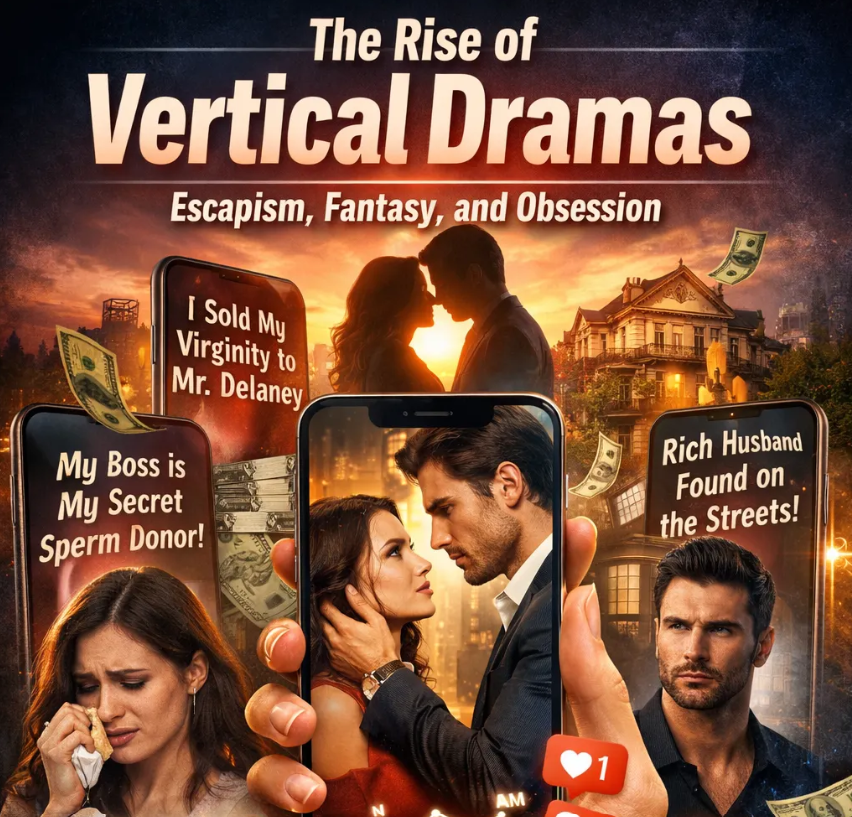
In particular, some vertical dramas use highly provocative phrasing such as I Sold My Virginity to Mr. Delaney or My Boss Is My Secret Sperm Donor. While these titles are meant to emphasize drama or shock value, they can easily be mistaken by new viewers as belonging to explicit adult content.
This raises an important question about the industry’s marketing strategy. Some critics argue that such titles blur the line between dramatic storytelling and suggestive or “soft-porn” style advertising. For unfamiliar audiences encountering these ads online, the distinction between vertical drama and adult entertainment can become unclear.
Whether this is an unintended consequence or a deliberate attempt to attract attention is still debated. What is clear, however, is that as the industry grows, the way these stories are presented, especially through titles, may require more careful moderation.
If vertical dramas aim to gain wider mainstream acceptance, balancing attention-grabbing marketing with responsible branding may become an important challenge for the future of the format.
How Vertical Dramas Found Their Audience
One of the most fascinating aspects of the vertical drama boom is how these productions were marketed. Unlike traditional television or streaming series, vertical dramas did not initially benefit from large promotional campaigns, major studios, or coverage from established entertainment outlets. As a new and independent format, creators had to find alternative ways to reach audiences.
The solution came through social media platforms. Apps such as Facebook, Instagram, and TikTok quickly became the primary promotional channels for vertical dramas.
Production companies began uploading short promotional clips directly from their series. These clips usually featured the most dramatic moments of the story, heated confrontations, shocking betrayals, emotional confessions, or romantic tension. However, the marketing strategy followed a very specific formula: the clip would always end right at the most intense cliffhanger.
Just as the audience was about to see the resolution of the scene, the video would abruptly stop, prompting viewers to click a link, download the app, and continue watching the story there. This strategy perfectly mirrored the storytelling structure of the dramas themselves, fast, addictive, and driven by curiosity.
Because vertical dramas were largely independent productions at the beginning, they lacked the traditional marketing support available to mainstream television or film. Instead of billboards, television commercials, or large press campaigns, they relied on algorithm-driven discovery through social media.
Ironically, this limitation became one of the format’s greatest strengths. Social media allowed these productions to reach millions of viewers organically, turning short dramatic clips into viral content. What began as a necessity soon became the industry’s most effective promotional strategy.
Through clever use of cliffhanger marketing and platform algorithms, vertical dramas found a way not only to reach audiences, but to build a profitable and rapidly expanding global industry.
The Rise of the Fandom and Its Advocates
As vertical dramas began gaining popularity across the world, something else started to grow alongside them: a passionate fan community. With new series being released constantly on dedicated apps, viewers quickly formed online spaces where they could discuss plots, favorite actors, and controversial storylines. Out of these communities, a number of independent advocates and commentators emerged, people who began analyzing the format and supporting its development.
Among the earliest voices were Jen Cooper, known online through the Vertical Drama Love platform, and Cass Arcadia Smith, who runs the Vertical Drama Queen account on Instagram. Both began their journeys independently, driven simply by their interest in the emerging format. At first, their work consisted of small posts and reviews, breaking down specific dramas, analyzing storylines and character dynamics, and discussing what worked and what did not.
Over time, their commentary expanded beyond simple fan reactions. They began reviewing productions in depth, highlighting recurring tropes, discussing the strengths and weaknesses of certain narratives, and even speaking directly with actors from the industry. What started as personal enthusiasm gradually turned into something more influential.
Today, their presence in the vertical drama ecosystem is widely recognized. As the industry continues to expand, figures like Jen Cooper and Cass Arcadia Smith have become visible advocates for the genre, attending events, visiting production sets, and participating in conversations about how vertical storytelling can improve and evolve.
Their efforts also helped inspire others. In recent year, a growing number of Instagram creators have joined the conversation, building pages dedicated to vertical dramas. These accounts produce interviews with actors, publish behind-the-scenes insights, review new releases, and promote upcoming projects. What began with a handful of passionate fans has now developed into a network of online creators actively supporting and promoting the industry.
Together, these advocates and content creators have become an important bridge between the audience and the productions themselves. By celebrating actors, highlighting new series, and openly discussing the strengths and weaknesses of the format, they contribute to a growing community that continues to push vertical drama storytelling forward.
Toward Industry Recognition
As vertical dramas continue to expand, many believe the format is approaching a critical stage in its development. In 2025, the growing sector drew the attention of the actors’ union SAG-AFTRA, which began acknowledging vertical productions within its broader scope. While this recognition marked an important step forward, many in the community feel that it is only the beginning.
For vertical dramas to establish themselves as a lasting addition to the entertainment landscape, alongside traditional television, film, and streaming productions, several key elements still need to evolve.
One of the most important is networking and industry integration. The actors, writers, and directors working in vertical dramas often operate in a separate ecosystem from mainstream Hollywood. Building stronger connections with industry professionals, agencies, and production companies could help bring more resources and opportunities to the format.
Another major factor is media visibility. Despite the enormous viewership numbers generated by vertical drama apps, the genre still receives relatively little coverage from large entertainment outlets. Expanded media attention and marketing support could help legitimize the format and bring it into wider public awareness.
Equally important is recognition for the actors themselves. Many performers working in vertical dramas have built significant fanbases, yet their work is rarely acknowledged by the same institutions that celebrate television and film. Without greater recognition and career opportunities within the format, there is a risk that talented actors may eventually leave vertical productions in order to pursue roles in traditional television series or major film projects.
Some early attempts at expanding the format’s visibility have already taken place. One example was the theatrical debut of the drama Love & Blood, which experimented with presenting vertical storytelling in a cinema setting. Although the event was relatively small, it demonstrated the potential for the format to move beyond smartphone screens and into new spaces.
Another important development is the emergence of award recognition for vertical dramas. Industry-wide awards comparable to the Academy Awards or the Grammy Awards do not yet exist for this medium, but grassroots initiatives are beginning to fill that gap.
One notable example comes from Jen Cooper, the advocate behind the Vertical Drama Love platform. Last year, she organized a fan-based award ceremony celebrating actors and productions in the vertical drama space. The initiative was entirely independent, funded and organized by Cooper herself, who announced the winners from her own living room.
This year marks a significant step forward. The awards are planned to take place in Los Angeles, in a physical venue where actors, producers, and directors from the vertical drama industry will be invited to attend. What began as a grassroots fan initiative is gradually evolving into a real event that recognizes the people behind the format.
Developments like these suggest that vertical dramas are entering a new phase. What started as experimental smartphone storytelling is slowly building the infrastructure, events, recognition, advocacy, and community, that could allow it to stand alongside established entertainment formats.
The Marketing Trap: A “Race to the Bottom”
Another major concern within the vertical drama ecosystem has been raised by community advocate Jen Cooper, whose platform Vertical Drama Love has closely observed how the current marketing system is shaping the content being produced.
According to Cooper’s analysis, the issue does not necessarily begin with the stories themselves but with the way vertical dramas are marketed on social media. Because the industry relies heavily on platforms like TikTok, Instagram, and Facebook, promotional clips are designed to maximize engagement, watch time, shares, comments, and clicks.

As she explains, social media algorithms naturally reward content that triggers strong emotional reactions: shock, anger, fear, sexual tension, or moral outrage. These reactions keep viewers engaged longer, which in turn pushes the content further into recommendation feeds. The result is a feedback loop where marketing increasingly highlights the most sensational or extreme moments from a drama, because those are the scenes most likely to go viral.
Over time, this system can create what Cooper describes as an escalation effect. What once felt shocking eventually becomes normal, forcing producers to push storylines even further to capture attention. In marketing terms, this leads to more explicit scenes, more violent hooks, more toxic dynamics, and increasingly outrageous plot points.
But as she points out, clicks are not the same as loyalty. A clip that triggers outrage or curiosity may generate views, but it does not necessarily translate into meaningful emotional investment in the story. Visibility alone does not equal cultural value.
Another issue highlighted by Vertical Drama Love involves misleading promotional tactics. Some advertisements splice scenes from dramas together with suggestive edits, artificial voiceovers, or provocative text overlays that imply sexual or scandalous content not actually present in the show. In some cases, creators have even reported that marketing teams used AI-generated voiceovers or altered footage in ways that misrepresent the original work.
This approach, Cooper argues, risks crossing into false advertising while also disrespecting the actors, writers, and creators who worked on the production. Scenes can be taken out of context or twisted purely to generate clicks, sometimes presenting the project in ways the creators never intended.
Despite these criticisms, Cooper also emphasizes that the situation is not entirely negative. The vertical drama space still produces original, creative stories with strong scripts and compelling characters. The problem lies in how the marketing system amplifies the most extreme elements, creating the impression that this type of content defines the entire industry.
Her conclusion is both simple and practical: audiences ultimately shape the market. By supporting the platforms and productions that focus on well-written stories rather than sensational marketing, viewers can help steer the industry toward a healthier direction.
As Vertical Drama Love puts it, the future of the format may depend on “voting with your money”, supporting the shows that prioritize storytelling over shock value and encouraging creators who are trying to push the medium forward.
Inside the Vertical Drama Audience
What 4834 viewers reveal about the fastest-growing storytelling format?
Vertical dramas, short episodic stories designed for mobile viewing, have rapidly evolved from niche social media experiments into a global entertainment phenomenon. Platforms like ReelShort, NetShort, and DramaBox now reach millions of viewers who watch serialized stories directly on their phones.
But why are audiences so drawn to this format?
To better understand the psychology, motivations, and expectations of vertical drama viewers, a survey of 4834 dedicated fans was conducted. Participants were asked about how they discovered vertical dramas, why they continue watching them, what emotional experiences the stories create, and what improvements audiences hope to see in the future.
The results reveal a passionate, thoughtful audience, one that is deeply invested in the format but also highly aware of its strengths and weaknesses.
How Audiences Discover Vertical Dramas
For most viewers, discovering vertical dramas is not intentional, it’s algorithmic.
Nearly two-thirds of respondents (64%) said they first encountered vertical dramas through advertisements on social media, particularly on platforms like Instagram, Facebook, and TikTok.
These ads often appear as dramatic short clips designed to spark curiosity.
Another 17% discovered vertical dramas through ads embedded in mobile games, while smaller groups found them through storytelling apps like Galatea or audio platforms such as Pocket FM.
For many viewers, the discovery process followed the same pattern: repeated exposure eventually turned curiosity into a download.
“I kept seeing the ads over and over. Eventually I downloaded the app just to see what it was about, and then I was hooked.”
Interestingly, some respondents discovered vertical dramas during difficult personal circumstances such as illness, hospital stays, or periods of emotional stress. In these cases, the stories became more than simple entertainment, they became a form of comfort.
First Impressions: “Cheesy, But Addictive”
Despite their eventual loyalty, many viewers admitted that their first reaction to vertical dramas was skepticism.
About 31% described the format as “cheesy but addictive,” while 38% said they were simply curious after seeing dramatic ad clips.
Only about one in five viewers immediately loved the format.
A common reaction among new viewers was surprise at how quickly the storytelling format becomes compelling.
“At first I thought it was ridiculous. But I absolutely had to know how it ended.”
The combination of fast pacing, cliffhangers, and emotionally intense storytelling quickly transforms curiosity into binge watching.
Why Fans Keep Watching?
The survey revealed three main motivations that keep viewers returning to vertical dramas.
1. Escapism
More than half of respondents (52%) said vertical dramas provide an escape from daily stress.
“They take me away from everyday life into a fantasy world.”
The short episodes, often under two minutes, make it easy to watch stories anywhere: during commutes, breaks, or late at night.
2. Actor Loyalty
About 27% of viewers said they watch primarily for specific actors.
Unlike traditional film or television stars, vertical drama actors often interact directly with fans on social media, creating a sense of community.
“The actors actually talk to fans. That makes you want to support them.”
3. Narrative Curiosity
Roughly 21% said they keep watching because they want to know how the story ends.
The cliffhanger-driven storytelling structure encourages continuous viewing.
The Emotional Pull of Vertical Stories
Vertical dramas evoke a wide range of emotional responses.
The most frequently reported emotions were:
- Hope and romantic optimism (42%)
- Comfort and escapism (28%)
- Emotional intensity, crying, anger, excitement (20%)
- Suspense and curiosity (10%)
Many viewers described the format as emotionally immersive.
“You laugh, you cry, you get angry at the villains, and you stay until justice is served.”
For some respondents, vertical dramas even played a therapeutic role.
One viewer explained that watching these stories helped them process personal trauma and reflect on past experiences.
What Makes Vertical Dramas So Addictive?
Several factors contribute to the addictive nature of vertical storytelling.
Cliffhangers
The most frequently mentioned element was episode cliffhangers, cited by 35% of respondents.
Episodes often end at the most dramatic moment, encouraging viewers to immediately watch the next installment.
Actor Chemistry
About 33% highlighted the importance of the cast, particularly the chemistry between romantic leads.
Romace
Romantic storylines remain central to the genre, with 22% of respondents citing romance as the main attraction.
Short Format
The remaining viewers emphasized the short episode structure, which allows entire story arcs to be consumed quickly.
The Stories Fans Love Most
Despite the growing diversity of vertical drama content, certain themes dominate. The most popular genres among respondents were:
Genre — Popularity
Romance 72%
Mafia dramas 41%
Supernatural (werewolves, vampires) 39%
CEO / billionaire romances 36%
Rom-coms 28%
Romance clearly remains the backbone of vertical storytelling.
However, viewers expressed interest in expanding beyond these familiar tropes.
What Fans Want Next
Survey participants suggested several genres they would like to see explored more frequently:
- historical dramas
- pirate adventures
- science fiction
- psychological thrillers
- crime and mystery stories
- horror
Many respondents also called for greater diversity in storytelling, including characters with disabilities, older protagonists, and more culturally diverse casts.
Storytelling Problems Fans Notice
Although viewers enjoy vertical dramas, they are also highly aware of recurring issues.
The most commonly mentioned problems include:
- Repetitive storylines (44%)
- Continuity errors (37%)
- Excessive humiliation scenes (35%)
- Medical or factual inaccuracies (22%)
Some viewers pointed out amusing continuity mistakes.
“One scene the character’s jacket is on. The next shot it’s gone. Then it’s back again.”
Others noted that some scripts appear to be reused across multiple productions with different actors.
A Major Concern: Violence and Abuse
One of the most striking findings from the survey was the strong reaction to depictions of abuse.
More than half of respondents (51%) said extreme abuse scenes are excessive and should be reduced.
Another 27% said such scenes are acceptable only if they serve the story.
For some viewers, these scenes are emotionally difficult to watch.
“It can be triggering. I watch these stories for escape, not to relive trauma.”
Many fans emphasized that stories can still be dramatic and compelling without repeated scenes of humiliation or violence.
When Viewers Stop Watching
Several factors consistently caused viewers to abandon a vertical drama:
- excessive violence or abuse
- repetitive storytelling
- poor acting
- unrealistic plot developments
More than 60% of respondents specifically cited violence against female characters as a reason they might stop watching a series.
The Vertical Drama Community
Beyond the stories themselves, many viewers emphasized the importance of the fan community.
Online fan groups, comment sections, and social media discussions create a shared viewing culture that strengthens engagement.
“The vertical community feels like a family.”
However, fans also raised concerns about scams involving fake actor accounts and impersonation online.
The Industry’s Growing Potential
Several respondents expressed the belief that vertical dramas are still in an early stage of development.
Many called for improvements such as:
- better writing and storytelling
- stronger production quality
- fewer repetitive scripts
- centralized streaming platforms instead of dozens of separate apps
- greater recognition for actors and creators
Despite these concerns, the majority of viewers remain enthusiastic about the format’s future.
Conclusion: A New Form of Storytelling
The survey highlights a fascinating paradox.
Vertical dramas are often criticized for their repetitive plots, continuity errors, and exaggerated storytelling. Yet audiences remain deeply engaged with the format.
Why?
Because at their core, vertical dramas deliver something timeless: emotionally driven stories about love, conflict, and redemption, told in a way that fits perfectly into modern mobile life.
For many viewers, these stories provide more than entertainment. They offer comfort, escapism, and sometimes even community.
As the industry continues to evolve, one thing is clear: vertical storytelling is not a passing trend. It is a new chapter in the way audiences experience drama.
Why Viewers Become So Attached to Vertical Dramas
After analyzing the survey responses, I consulted a therapist to better understand why viewers often become deeply engaged, sometimes even obsessed, with vertical dramas. The findings suggest that their popularity is not accidental but connected to human psychology, biological responses, and emotional needs.
The Brain and the Cliffhanger Effect
Vertical dramas are built around constant cliffhangers, which trigger dopamine, the brain’s reward chemical. Each unresolved moment creates anticipation, encouraging viewers to watch “just one more episode.” Because episodes last only one or two minutes, this cycle repeats rapidly, creating a viewing pattern similar to social media scrolling.
The Intimacy of the Format
Watching vertical dramas on smartphones creates an unusually personal viewing experience. Close-up shots and full-screen vertical framing make viewers feel as if they are directly witnessing the events. This sense of intimacy intensifies emotional reactions and strengthens audience engagement.
Emotional Release and Escapism
Psychologically, these dramas function like a safe emotional simulator. Viewers can experience intense emotions, betrayal, anger, romance, revenge, without real-world consequences. For many people, this provides a form of catharsis, helping them release stress or temporarily escape everyday pressures.
Why Conflict Attracts Attention
Humans are naturally drawn to stories about conflict and social dynamics. Evolutionarily, paying attention to betrayal, loyalty, and power struggles helped people navigate complex social environments. Vertical dramas tap into this instinct by presenting exaggerated but emotionally recognizable conflicts.
Potential Risks
While the emotional intensity attracts viewers, psychologists also warn that repeated exposure to toxic relationship dynamics can blur the line between passion and unhealthy behavior, especially for younger audiences.
In short, vertical dramas succeed because they combine neurological reward cycles, emotional escapism, and instinctive human curiosity about conflict, making them one of the most psychologically engaging storytelling formats of the smartphone era.
When Escapism Becomes Excess: A Therapist’s Perspective
Another pattern that emerged from the survey was the intensity of fan devotion. Many respondents described watching vertical dramas daily, following actors closely, and emotionally investing in storylines. To better understand this behavior, the survey findings were discussed with a therapist specializing in media consumption and emotional coping.
According to the therapist, the appeal of these dramas often reflects a desire to escape a difficult or stressful reality.
Vertical dramas frequently follow a familiar structure: a character faces overwhelming hardship but eventually finds love, wealth, and a “fairy-tale” resolution. The stories promise a world where suffering is temporary, justice is guaranteed, and happiness arrives, often in the form of a wealthy, powerful, or exceptionally attractive partner.
In other words, they offer a utopian version of reality.
The format also emphasizes physical beauty and romantic fantasy. Attractive actors and idealized characters play a major role in the appeal. Fans often express admiration for performers whose appearance resembles the romantic heroes of popular novels, figures who embody confidence, power, and desirability.
The therapist explained that this attraction is rooted in a basic psychological need.
“People are drawn to beauty and fantasy because they represent possibilities that feel missing in everyday life.”
However, the key question is whether this level of consumption is healthy.
The therapist’s answer was nuanced. Entertainment and escapism themselves are not harmful. In fact, they can provide relaxation and emotional relief. But when any form of media becomes excessive, it may signal avoidance rather than enjoyment.
One potential concern is a psychological pattern known as maladaptive daydreaming. This condition occurs when individuals become deeply absorbed in imagined scenarios, often idealized versions of life where problems resolve perfectly and personal desires are fulfilled.
Vertical dramas can unintentionally encourage this type of thinking. Their narratives frequently present a world where suffering leads to sudden reward: the struggling heroine discovers a millionaire partner, injustice is corrected instantly, and love conquers every obstacle.
For some viewers, this reinforces a fantasy-driven mindset where imagined outcomes feel more satisfying than confronting real-life challenges.
Importantly, the therapist emphasized that maladaptive daydreaming is not inherently dangerous. Many people occasionally escape into fictional worlds. The issue arises only when fantasy begins to replace real engagement with life.
“Escapism is normal. It becomes unhealthy only when it becomes someone’s entire identity.”
In moderation, vertical dramas can provide entertainment, emotional release, and even inspiration. But like any powerful storytelling format, their influence depends on how, and how much, they are consumed.
Conclusion: A Format Still in the Making
Vertical dramas have evolved from a curious social-media experiment into one of the most disruptive storytelling formats of the smartphone era. Built on short episodes, intense emotional hooks, and algorithm-driven marketing, they have created a new way for audiences to consume stories, quickly, intimately, and often obsessively.
Yet the research and survey responses reveal a complex reality. Fans are deeply engaged with the format, drawn by escapism, romance, charismatic actors, and the addictive rhythm of cliffhangers. At the same time, audiences are increasingly aware of the format’s limitations: repetitive plots, questionable portrayals of relationships, sensational marketing tactics, and the psychological pull that can turn casual viewing into compulsive consumption.
This tension is not unusual for a new medium. Every emerging storytelling format, from early cinema to television soap operas, has passed through similar phases of experimentation, criticism, and refinement. Vertical dramas now stand at that same crossroads.
If the industry continues to evolve, investing in stronger writing, more responsible storytelling, greater recognition for actors, and broader creative diversity, the format has the potential to become far more than a mobile novelty. It could develop into a legitimate and lasting branch of global entertainment.
For now, vertical dramas remain exactly what they have always been: fast, emotional, messy, addictive, and still very much a work in progress.


Written by Engjell Hasula
Independent writer and interviewer. Editor of BODONY, an independent editorial featuring conversations and portraits of artists across creative industries.
Follow Buy me a coffee