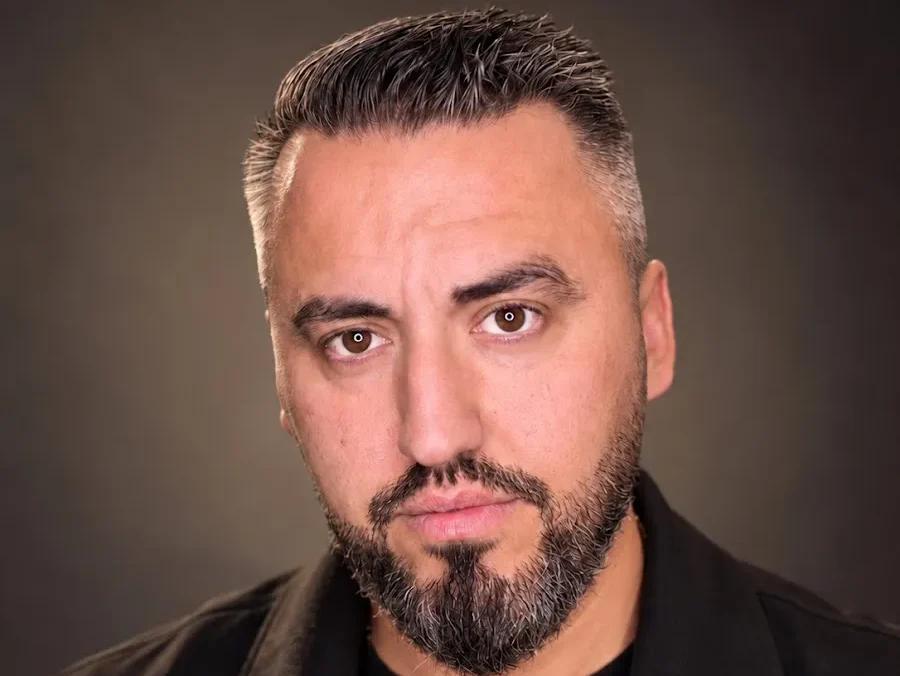

Some artists come to music once. Levano came back to it. He started DJing at 14 or 15 and spent more than ten years producing remixes. Then he stepped away from music completely. When he returned, he didn’t want to rework anyone else’s songs. He wanted to write his own.
Today the Germany-based independent artist makes music rooted in his Albanian heritage. He blends Balkan and folk elements with pop, R&B and hip-hop, and on “Te Dua Askim (Ya Omri)” he adds Turkish and Arabic touches too. His songs deal with love, family, longing and the small everyday moments people recognize from their own lives. “Kafja” grew out of a morning coffee on a balcony. “Nëna Ime” gives a new voice to a decades-old tribute to mothers.
In this conversation with BODONY, Levano talks about how a simple idea becomes a finished song, why he won’t settle on a single genre, the Albanian artist he’d most like to share a stage with, and the album he’s in no rush to make.
Levano, welcome, and thank you for taking the time. For readers meeting you for the first time, how would you introduce yourself and your music?
I’m Levano, an independent artist based in Germany. My music is strongly connected to my Albanian roots, but at the same time I like to combine that identity with modern sounds such as pop, R&B and hip-hop, and sometimes more traditional Balkan influences.
For me, music is mainly about emotion and storytelling. I like writing songs about love, family, longing and everyday moments that people can recognize themselves in. I don’t want the music to feel distant or overly complicated. I want someone to hear a song and immediately feel that there is something real behind it.
Every artist remembers the moment music stopped being a hobby and became something they had to do. When was that moment for you, and what pushed you to start releasing your own songs?
My connection to making music actually started very early. When I was around 14 or 15, I began working as a DJ and started producing my own remixes. That became a big part of my life, and I continued doing it for more than ten years.
After that, I stepped away from music for a while. But the interest never really disappeared. Eventually, I felt the urge to create again, only this time I didn’t want to focus on remixes or DJing. I wanted to build something of my own and release original songs.
That was really the beginning of Levano. In a way, it feels less like starting from zero and more like returning to music with a different perspective, more experience and a clearer idea of what I want to express.
Levano, you’ve released an impressive number of songs in a short time, and each one carries its own story and feeling. We’d love to get inside your creative world. When you sit down to create and write a new song, what does the process look like for you? Does it usually start with a melody in your head, a few lines of lyrics, or a personal moment or memory that stays with you? And how do you shape that first spark into a finished song?
Most of the time, a song starts with an idea, a feeling or a small story rather than with a finished melody. It can be something I have experienced myself, something I have observed, or simply a situation that I think people can relate to.
From there, I usually begin shaping the lyrics and the atmosphere around that idea. I like the words to feel natural and direct, especially when I write in Albanian. I don’t want them to sound overly poetic just for the sake of it. I want them to sound like something a real person would actually say and feel.
Once the core of the song is there, I start working on the musical direction: the rhythm, melody, energy and overall sound. That part can take a lot of experimenting. I often try different approaches until the music really matches the emotion of the lyrics.
For me, the first idea is usually quite simple. The real work is turning that small spark into something that feels complete and still keeps the emotion that made me want to write the song in the first place.
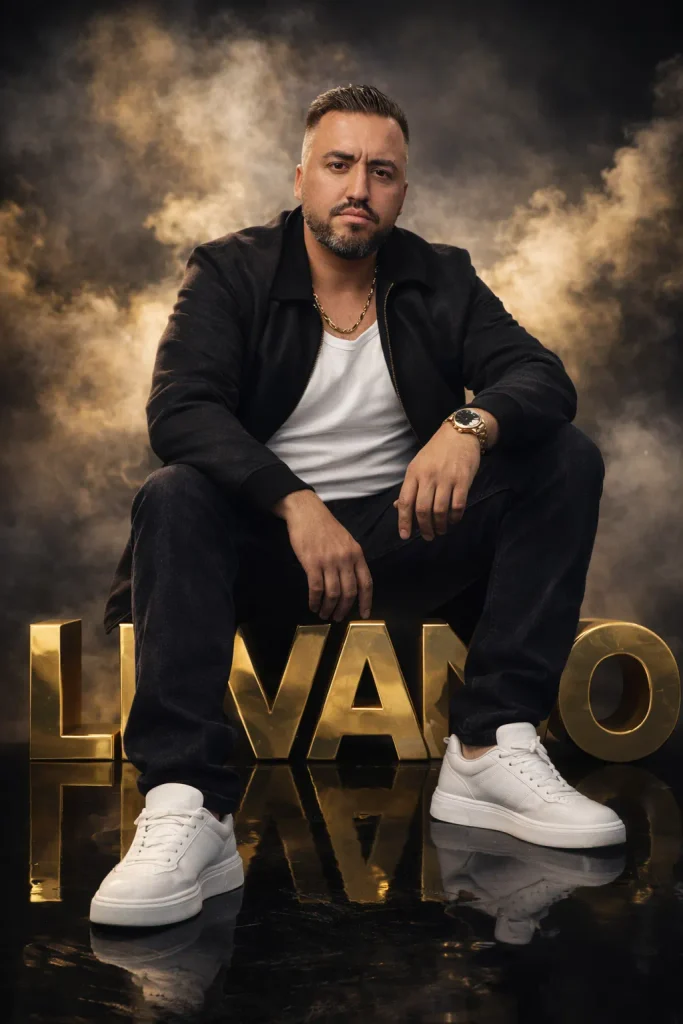
Your music moves easily between Albanian folk roots, R&B and more modern sounds, and on “Te Dua Askim (Ya Omri)” there are even Turkish and Arabic touches. How would you describe the Levano sound in your own words, and how did you arrive at it?
I would describe the Levano sound as a mix of my Albanian roots and the music that has influenced me throughout my life. There are elements of Albanian folk and Balkan music, but also R&B, hip-hop, pop and more modern production.
I don’t really like putting the music into one fixed category. For me, the emotion and the story of a song come first, and then I look for the sound that fits that feeling best. Sometimes that means using traditional Albanian elements, while another song may lean much more toward R&B or a modern urban sound.
“Te Dua Askim (Ya Omri)” is a good example of that. The Turkish and Arabic influences came naturally because those sounds share a certain warmth, emotion and melodic character that also connects well with Balkan music. I liked the idea of bringing those worlds together without losing the identity of the song.
I think the Levano sound developed naturally over time. It comes from everything I have listened to, my background, my years working with music as a DJ and producer, and simply being open to different cultures and sounds. I never sat down and decided that Levano had to sound a certain way. It grew into that by itself.
Is there a song that came to you very quickly, almost on its own? And one you struggled with or rewrote many times before it felt right?
“Kafja” is probably one of the best examples of a song that came together very naturally. The idea was simple: a morning coffee, a balcony, and seeing someone passing by who suddenly changes the whole mood of that moment. Once I had that little scene in my head, the story almost wrote itself. I like songs like that because they come from very ordinary situations, but there can still be a lot of feeling in them.
“Flokët e Bardha” was almost the opposite. The original idea was for it to work as a song for a couple’s dance at a wedding. Recently, I tried approaching the same song as a ballad, and that completely changed the way I heard it. Suddenly, the lyrics and the emotion felt much stronger and more meaningful.
I haven’t made the final decision yet whether I will release “Flokët e Bardha” as a ballad, but at the moment there is a very good chance that I will. I think that is also an important part of the creative process: sometimes you believe you already know what a song is supposed to be, and then one small change reveals a completely different side of it.
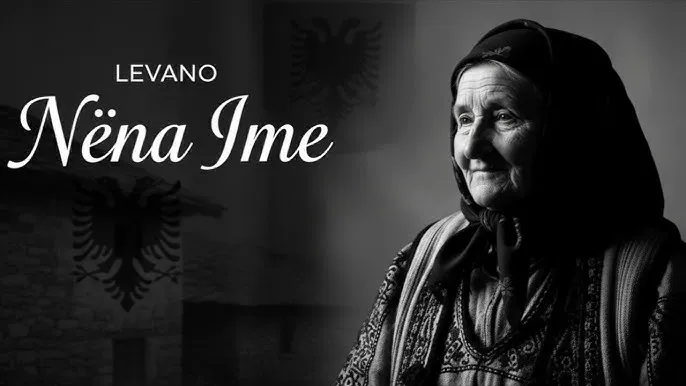
“Nëna Ime” has touched a lot of listeners. It’s a beautiful tribute to mothers. What inspired it, and what has it meant to you to see how people respond to it?
“Nëna Ime” is based on a much older Albanian song whose original version goes back to the late 1980s or early 1990s. There was a later remake of the song as well, but the roots of the lyrics and the original song go back much further.
What fascinated me was that the message still feels just as emotional and relevant today. The love and gratitude we feel for our mothers doesn’t belong to one generation, so I wanted to take that older song and give it a new musical interpretation that could also connect with listeners today.
For me, it was important to respect the emotional core of the original while still making the song feel like my own version. Seeing how strongly people have responded to “Nëna Ime” has meant a lot to me, because it shows how powerful a song can remain even decades after it was first written.
I especially like the idea that some people may discover the song for the first time through my version, while others may recognize something they already knew from many years ago. That connection between generations is what makes the song particularly special to me.
If someone had never heard your music, which song would you want them to start with, and why that one?
That’s actually difficult for me to answer, because everyone connects with different kinds of music.
Personally, I think my current song “Kafja” is a very good introduction for someone who already listens to Albanian music. It doesn’t follow a strongly traditional style, but it also doesn’t belong to one specific modern genre. It has a soft, easy-going sound and a hook that stays in your head, which makes it quite accessible.
In general, if I wanted to introduce someone to Levano, I would probably choose songs that are not too strongly influenced by R&B at first. Songs like “Te Dua” or “Mos Harro” might also be good starting points because they show a broader side of my sound.
At the same time, I think the best song always depends on the listener. Someone who loves R&B might connect much more with “Zjarr Zjarr” or “Shikimi Yt”, while someone else may prefer the softer or more Albanian-influenced songs.
Is there an Albanian artist, past or present, you’d love to share a song or a stage with? What do you think that collaboration would sound like?
There are several Albanian artists I really like, but Alban Skenderaj would definitely be at the top of my list.
What I appreciate most about him is the emotion in his music and the way he can tell a story without making it feel complicated or forced. His songs often feel very personal and honest, and that is something I value a lot in music.
If I could collaborate with him, I imagine it would be something melodic and emotional rather than a very heavy production. Maybe a song that starts quite intimate, with a strong story and simple instrumentation, and then grows into a bigger, powerful chorus.
For me, that would be a very special collaboration because I believe our styles and musical approaches could come together in a way that feels natural, modern and still strongly connected to Albanian music.
What’s coming next for you musically: more singles, music videos, maybe a full album? Is there a direction or sound you’re excited to explore?
For now, I’m focusing on singles because, for me, an album needs to have a real concept behind it. At the moment, I still want to stay free thematically.
There are several more singles planned, and I’m enjoying the freedom of being able to give each song its own mood and direction.
I do already have an idea for an album and I’ve started thinking about it more seriously, but I don’t want to rush it. It’s something I may begin working on more actively in 2027, once the concept feels clear enough and I know exactly what I want the album to represent.
Last question: when someone presses play on a Levano song, what do you hope they feel? And is there a message you’d like to share with your listeners and BODONY readers?
I don’t think every Levano song should make people feel the same thing. Some songs are meant to be emotional, some should simply put you in a good mood, and others might remind you of a person, a place or a certain moment in your life.
What matters most to me is that the music creates some kind of connection. If someone hears a song and recognizes a part of their own story in it, or if a melody stays with them after the song has ended, then that already means a lot to me.
To everyone who listens to my music, shares a song, adds it to a playlist or simply sends me a message: thank you. As an independent artist, every bit of support really does make a difference, and I never take that for granted.
And to the BODONY readers who are discovering Levano for the first time: give the music a chance, listen to a few different songs, because there are many different sides to it. Maybe somewhere among them you’ll find one that feels like it was made for you.
Levano doesn’t want every listener to feel the same thing. Some of his songs are made to move you, some just to lift your mood, and some to bring back a person or a place you’d forgotten. For him, what matters is the connection. If someone recognizes part of their own story in a song, or a melody stays with them after it ends, that already means a lot to him.
He’s grateful for every share, every playlist add and every message. As an independent artist, he says, every bit of support really does make a difference. His advice to readers meeting him for the first time is to listen to a few different songs, because the music has many sides. Somewhere among them, he says, you might find one that feels like it was made for you.
Levano’s Social Media:

Written by Engjell Hasula
Independent writer and interviewer. Editor of BODONY, an independent editorial featuring conversations and portraits of artists across creative industries.
Follow Buy me a coffee